
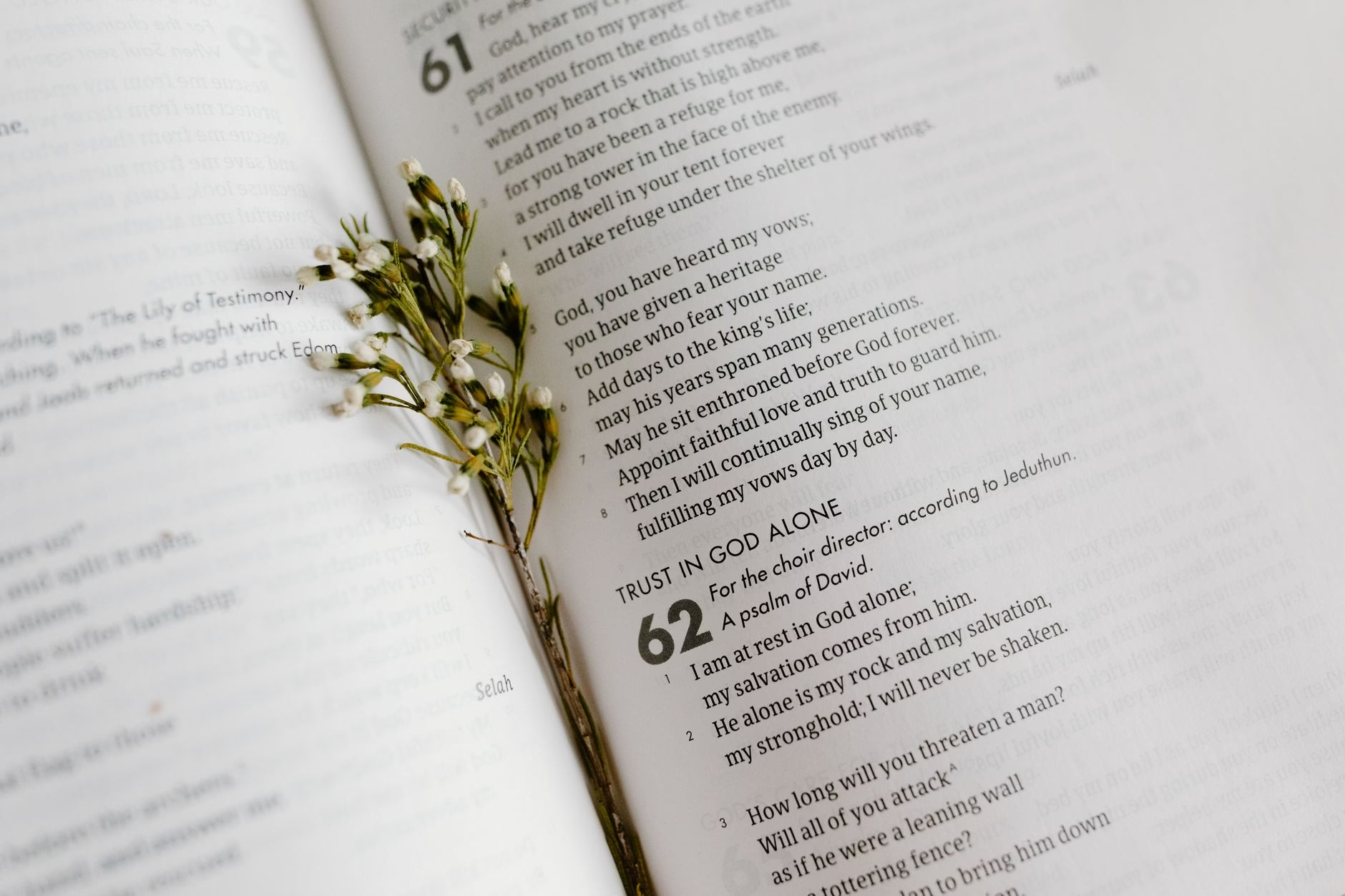
The Tension Between Our Clocks and God’s Calendar
There is a unique weight to waiting. Whether you are praying for the restoration of a broken relationship, waiting on the resolution of a financial crisis, longing for relief from chronic illness, or pleading for the salvation of a loved one, the space between a prayer offered and a prayer answered can feel vast and lonely. In those quiet stretches of life, our human instinct is often to equate delay with absence. We measure time in days, months, and calendar years, while God operates within the vastness of His eternal purpose.
This friction between our sense of urgency and God’s deliberate pacing is not a modern struggle; it is a foundational human experience recorded across the pages of scripture. Abraham waited twenty-five years for the fulfillment of God’s promise regarding his son Isaac. Moses spent forty years in the wilderness before hearing God speak from a burning bush. Joseph spent years in an Egyptian prison cell for crimes he did not commit before being elevated to save nations from severe famine. In every instance, God was not running behind schedule. He was intentionally shaping His servants for the very promise He had pledged to give them.
When we find ourselves stuck in a long season of waiting, the psalmist offers a clear directive that runs entirely counter to our restless nature:
“Wait for the LORD; be strong, and let your heart take courage; wait for the LORD!” – Psalm 27:14
Notice that scripture does not call us to a passive, resigned waiting. It connects waiting directly with courage and spiritual strength. To wait on the Lord is an active posture of the heart—a deliberate decision to anchor our soul in who God is when we cannot see what God is doing.
Understanding the Difference Between Waiting and Wasting
One of the greatest falsehoods we entertain during a quiet season is that nothing of value is happening. We assume that because our circumstances appear stagnant, God must be inactive. Yet biblical waiting is never wasted time. In the kingdom of God, the waiting room is a divine workshop.
God is far more concerned with who we are becoming than with how quickly we reach our desired destination. He uses seasons of delay to dismantle our self-reliance, prune our hidden pride, and deepen our intimacy with Him. If God were to grant us our desires before our character was prepared to carry them, those very blessings might become our spiritual ruin.
Consider how the prophet Isaiah describes the profound internal transformation that occurs when we surrender our timelines to God:
“but those who wait for the LORD shall renew their strength; they shall mount up with wings like eagles; they shall run and not be weary; they shall walk and not faint.” – Isaiah 40:31
The strength promised here is not self-generated resilience; it is a divine exchange. We bring our exhaustion, our impatience, and our limited vision to God, and in return, He equips us with His endurance. Eagle wings are not built for constant, frantic flapping; they are designed to catch the rising wind currents and soar gracefully. When we wait on the Lord, we stop frantically trying to force outcomes through sheer human effort and allow the Spirit of God to sustain us.
Anchoring Your Heart in God’s Character
Unshakeable trust in God’s timing cannot be built on a vague hope that things will eventually work out as we wish. It must be anchored directly in the character of God Himself. You cannot trust a clock if you do not trust the clockmaker. When you are tempted to doubt His timeline, you must return to what scripture reveals to be true about His heart.
God is omniscient; He sees the entire landscape of your life from beginning to end. He knows the hidden traps around the corner that you cannot see, and He knows the precise moment when your heart will be ready to receive His provision. Furthermore, God is perfectly good. His delays are never motivated by cruelty, indifference, or forgetfulness.
Solomon summarized this essential posture of trust with words that have guided believers for generations:
“Trust in the LORD with all your heart, and do not lean on your own understanding. In all your ways acknowledge him, and he will make straight your paths.” – Proverbs 3:5-6
Leaning on our own understanding is precisely what creates spiritual anxiety. Our understanding is constrained by our limited senses, our past hurts, and our immediate emotions. When we evaluate God’s timing through the narrow lens of our current trouble, we inevitably draw flawed conclusions. Trusting Him with all our heart means acknowledging that His wisdom is infinitely superior to our own.
We can rest in knowing that God’s primary objective in our lives is our growth in holiness and His eternal glory, working every detail toward a good end:
“And we know that for those who love God all things work together for good, for those who are called according to his purpose.” – Romans 8:28
Holy Habits for the Season of Delay
How do we practically walk through long seasons of waiting without giving way to bitterness or spiritual apathy? Trust is not merely a passive feeling; it is expressed through daily, intentional habits.
Practice Faithful Obedience Today
When you do not know what the distant future holds, focus on what God has already commanded you to do today. Faithfulness in your current assignment prepares your heart for the next season. Joseph did not spend his years in prison sulking; he served faithfully where he was, and God blessed the work of his hands even within walls of confinement.
Bring Honest Lament to God
Trusting God’s timing does not mean pretending that waiting is easy or painless. The Psalms are filled with raw, honest cries asking God how long He will remain silent. Bringing your sorrow, confusion, and grief to Him in prayer is an act of faith, because it acknowledges that He alone is the source of true comfort and answers.
Relinquish the Demand for Control
Much of our interior restlessness stems from trying to manage outcomes that belong entirely to God. Open your hands and surrender your preferred schedule, your specific conditions, and your demands. True faith allows God to fulfill His promises in His way and in His time, recognizing that His plan is infinitely better than our original design.
The Certainty of the Appointed Harvest
If you are weary today from carrying the weight of an unanswered prayer, take comfort in the truth of God’s Word. God has never broken a covenant, nor has He ever forgotten a promise made to His children. The delay you are experiencing is not a sign of His rejection; it is the quiet preparation for His appointed season.
The apostle Paul offers a vital encouragement to every believer who feels tempted to surrender to exhaustion:
“And let us not grow weary of doing good, for in due season we will reap, if we do not give up.” – Galatians 6:9
Notice the crucial phrase “in due season.” In agriculture, a farmer cannot force a crop to bear fruit in the depth of winter simply because he desires an immediate harvest. The seed must lie hidden in the dark soil for an appointed time, undergoing an invisible process of germination before the first green shoot pierces the surface. So it is with the work of God in your life.
Your current season of waiting is not empty space; it is holy soil. God is actively at work beneath the surface, aligning circumstances, maturing your faith, and preparing you to steward the grace He intends to bestow. Trust Him with the calendar of your life. Stand firm in His grace, knowing that in His perfect time, the harvest will surely come.




4 Comments
When we cultivate unshakeable trust in God’s timing, we experience a deep sense of peace.