Fake Money With Bible Verses

FAKE MONEY WITH BIBLE VERSES

Table of Contents

Short answer: Fake money with Bible verses consists of imitation currency featuring scripture to spread religious messages. Popular verses include John 3:16, emphasizing God's love and salvation. Its usage raises ethical questions, making it important to consider the impact on recipients.

Fake Money with Bible Verses: Exploring a Controversial Trend

In today's world, people have come up with all sorts of innovative ideas to spread their messages. One such trend that has sparked curiosity and raised eyebrows is the use of fake money adorned with Bible verses. This concept, while intriguing to some, has led to questions about its purpose, effectiveness, and ethical implications. In this blog post, we will delve into the origins of this trend, its intended goals, and the reactions it has invoked across various communities.

The Concept: What is Fake Money with Bible Verses?

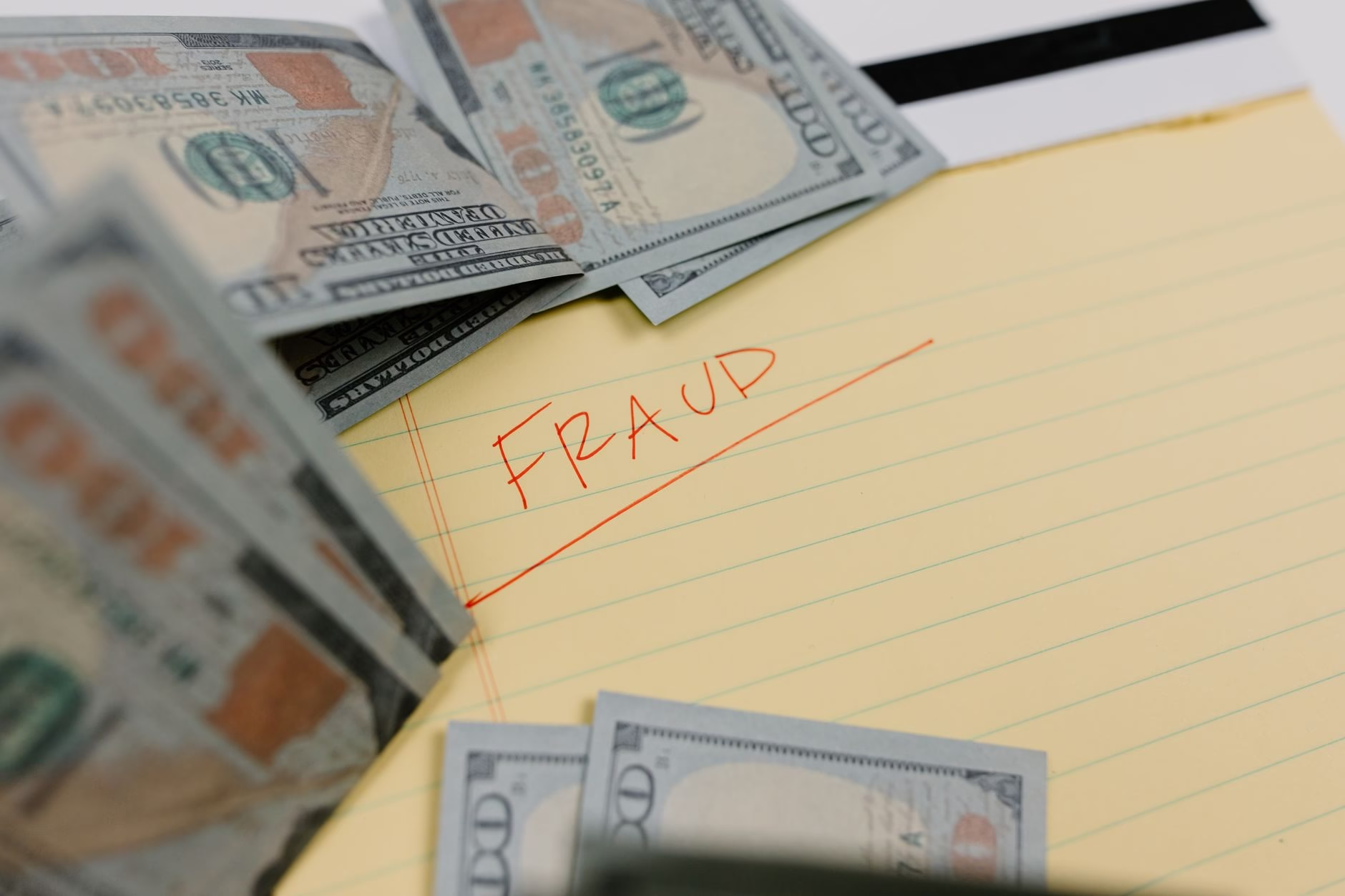
At its core, fake money with Bible verses is exactly what it sounds like—imitation currency that includes quotations from the Bible. These bills are not legal tender but are used as a tool for spreading religious messages. Often designed to mimic real currency closely, they are intended to catch the attention of those who stumble across them in places like public transport, cafes, and even as part of church donations.

Origins and Evolution

The history of using printed materials for religious outreach is long and varied. Tracts and pamphlets have been employed by religious groups for centuries to spread their beliefs. The incorporation of these messages onto fake currency is a more contemporary evolution, likely arising from a desire to attract attention in a visually saturated world. It’s believed that religious organizations, evangelists, or committed individual believers are behind the distribution of this fake currency.

Why Use Fake Money? Understanding the Intentions

The creators of fake money with Bible verses have several intentions, often grounded in religious outreach and moral education. Below are some of the primary goals:

  • Attention-Grabbing: The realistic appearance of these bills is designed to surprise and intrigue the finder, prompting them to reflect on the message rather than bypass it as they might with ordinary tracts.

  • Moral Evangelism: The Bible verses selected often contain themes of redemption, salvation, and divine love, aiming to resonate with people on an emotional or spiritual level.

  • Universal Appeal: Currency is a global language that everyone understands, making it an effective medium to convey messages that might otherwise go unnoticed.

Reactions and Controversy

Positive Reception

On one hand, some Christian communities and individuals see this as a clever and effective way to spread religious teachings. The novelty and surprise factor make the message memorable, potentially sparking a renewed interest in biblical teachings or encouraging someone in their faith journey.

Criticism and Ethical Concerns

Conversely, the method has not been without its critics—both secular and religious. Here are some common criticisms:

  • Deception: Some argue that mimicking real money might initially deceive or disappoint someone expecting to find legal tender, leading to frustration rather than enlightenment.

  • Dilution of Sacred Texts: Using scripture on imitation currency might be perceived as trivializing the sacredness of Bible verses.

  • Potential Legal Issues: Depending on how closely the fake money resembles actual currency, there could be legal implications related to counterfeiting laws.

Conclusion: A Reflection on Impact and Ethics

Fake money with Bible verses embodies a fascinating intersection between creative evangelism and ethical considerations. While its novelty cannot be denied, the broader implications of its use deserve thoughtful reflection. Whether viewed as an innovative outreach tool or a misguided attempt at spreading the faith, it prompts a dialogue on the methods and responsibilities involved in religious communication.

In conclusion, while the intention behind this trend might be well-meaning and its impact potentially positive for certain individuals, it is crucial to consider the approach’s broader reception and ethical standing. As with many forms of outreach, success and acceptance likely depend on the context and audience, highlighting the need for sensitivity and discernment in religious messaging strategies.


By understanding the nuances of this trend, individuals and organizations can make more informed decisions about how best to communicate their values and beliefs in a manner that respects both the message and the recipient.

Key Takeaways

  • Fake money with Bible verses aims to attract attention and spread religious messages.
  • Critics argue it may deceive or trivialize the sacredness of scripture.
  • The design resembles real currency to engage finders effectively.
  • Reactions vary from positive reception to ethical concerns in religious communication.

Approach with Sensitivity

When sharing religious messages, consider the context and audience. Thoughtful communication respects both the message and its recipients.

Frequently Asked Questions

What is the purpose of fake money with Bible verses?

It aims to spread religious messages and engage finders through attention-grabbing design.

Is it legal to distribute fake money?

Depending on the similarity to actual currency, there may be legal implications related to counterfeiting laws.

What Bible verses are commonly used?

Popular verses include John 3:16 and Romans 10:9, focusing on themes of love and salvation.

What are the criticisms of this approach?

Critics argue it can deceive finders and trivialize the sacred nature of scripture.

The Bottom Line

Using creative methods to share faith can be impactful, but it's essential to approach such strategies thoughtfully. Balancing innovation with respect for sacred texts fosters meaningful connections and invites more profound reflection.


Share it :

Leave a Reply

Your email address will not be published. Required fields are marked *

Relationships

Fake Money With Bible Verses

July 24, 2025 · 5 Min Read · 0 Comments
f X W
Fake Money With Bible Verses

Short answer: Fake money with Bible verses consists of imitation currency featuring scripture to spread religious messages. Popular verses include John 3:16, emphasizing God's love and salvation. Its usage raises ethical questions, making it important to consider the impact on recipients.

Fake Money with Bible Verses: Exploring a Controversial Trend

In today's world, people have come up with all sorts of innovative ideas to spread their messages. One such trend that has sparked curiosity and raised eyebrows is the use of fake money adorned with Bible verses. This concept, while intriguing to some, has led to questions about its purpose, effectiveness, and ethical implications. In this blog post, we will delve into the origins of this trend, its intended goals, and the reactions it has invoked across various communities.

The Concept: What is Fake Money with Bible Verses?

At its core, fake money with Bible verses is exactly what it sounds like—imitation currency that includes quotations from the Bible. These bills are not legal tender but are used as a tool for spreading religious messages. Often designed to mimic real currency closely, they are intended to catch the attention of those who stumble across them in places like public transport, cafes, and even as part of church donations.

Origins and Evolution

The history of using printed materials for religious outreach is long and varied. Tracts and pamphlets have been employed by religious groups for centuries to spread their beliefs. The incorporation of these messages onto fake currency is a more contemporary evolution, likely arising from a desire to attract attention in a visually saturated world. It’s believed that religious organizations, evangelists, or committed individual believers are behind the distribution of this fake currency.

Why Use Fake Money? Understanding the Intentions

The creators of fake money with Bible verses have several intentions, often grounded in religious outreach and moral education. Below are some of the primary goals:

  • Attention-Grabbing: The realistic appearance of these bills is designed to surprise and intrigue the finder, prompting them to reflect on the message rather than bypass it as they might with ordinary tracts.

  • Moral Evangelism: The Bible verses selected often contain themes of redemption, salvation, and divine love, aiming to resonate with people on an emotional or spiritual level.

  • Universal Appeal: Currency is a global language that everyone understands, making it an effective medium to convey messages that might otherwise go unnoticed.

Reactions and Controversy

Positive Reception

On one hand, some Christian communities and individuals see this as a clever and effective way to spread religious teachings. The novelty and surprise factor make the message memorable, potentially sparking a renewed interest in biblical teachings or encouraging someone in their faith journey.

Criticism and Ethical Concerns

Conversely, the method has not been without its critics—both secular and religious. Here are some common criticisms:

  • Deception: Some argue that mimicking real money might initially deceive or disappoint someone expecting to find legal tender, leading to frustration rather than enlightenment.

  • Dilution of Sacred Texts: Using scripture on imitation currency might be perceived as trivializing the sacredness of Bible verses.

  • Potential Legal Issues: Depending on how closely the fake money resembles actual currency, there could be legal implications related to counterfeiting laws.

Conclusion: A Reflection on Impact and Ethics

Fake money with Bible verses embodies a fascinating intersection between creative evangelism and ethical considerations. While its novelty cannot be denied, the broader implications of its use deserve thoughtful reflection. Whether viewed as an innovative outreach tool or a misguided attempt at spreading the faith, it prompts a dialogue on the methods and responsibilities involved in religious communication.

In conclusion, while the intention behind this trend might be well-meaning and its impact potentially positive for certain individuals, it is crucial to consider the approach’s broader reception and ethical standing. As with many forms of outreach, success and acceptance likely depend on the context and audience, highlighting the need for sensitivity and discernment in religious messaging strategies.


By understanding the nuances of this trend, individuals and organizations can make more informed decisions about how best to communicate their values and beliefs in a manner that respects both the message and the recipient.

Key Takeaways

  • Fake money with Bible verses aims to attract attention and spread religious messages.
  • Critics argue it may deceive or trivialize the sacredness of scripture.
  • The design resembles real currency to engage finders effectively.
  • Reactions vary from positive reception to ethical concerns in religious communication.

Approach with Sensitivity

When sharing religious messages, consider the context and audience. Thoughtful communication respects both the message and its recipients.

Frequently Asked Questions

What is the purpose of fake money with Bible verses?

It aims to spread religious messages and engage finders through attention-grabbing design.

Is it legal to distribute fake money?

Depending on the similarity to actual currency, there may be legal implications related to counterfeiting laws.

What Bible verses are commonly used?

Popular verses include John 3:16 and Romans 10:9, focusing on themes of love and salvation.

What are the criticisms of this approach?

Critics argue it can deceive finders and trivialize the sacred nature of scripture.

The Bottom Line

Using creative methods to share faith can be impactful, but it's essential to approach such strategies thoughtfully. Balancing innovation with respect for sacred texts fosters meaningful connections and invites more profound reflection.

0 Comments

Leave a Reply

Your email address will not be published. Required fields are marked *

Join Our Newsletter
Get Scripture, new articles, and Bible topics in your inbox.
Stay In The Word

Get Scripture and New Articles In Your Inbox

Join subscribers who receive daily verses and fresh Bible teaching from The Bible Teaches This.