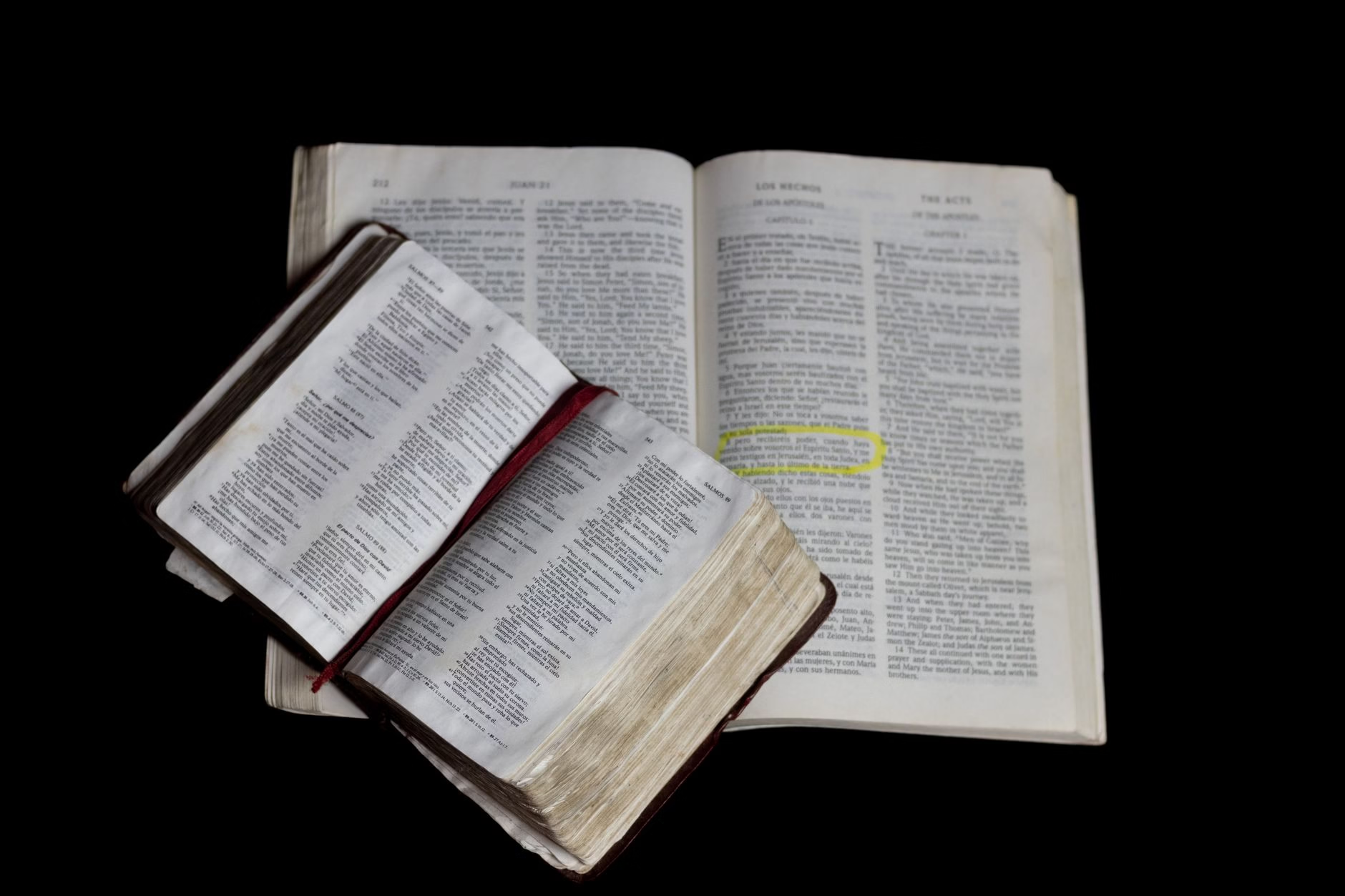
Short answer: Key Bible verses for Maundy Thursday include John 13:34-35, which emphasizes loving one another, and Luke 22:19-20, highlighting the institution of the Eucharist. These passages capture the essence of love, service, and sacrifice central to this holy day.
Bible Verses for Maundy Thursday: A Reflection on Love and Service
Maundy Thursday, also known as Holy Thursday, is a significant day in the Christian calendar, commemorating the Last Supper of Jesus Christ with his disciples. It’s a day that embodies profound themes of love, service, and humility. As believers prepare for this sacred occasion, reflecting on Bible verses that capture the essence of Maundy Thursday can provide spiritual insight and inspiration.
Understanding Maundy Thursday
Maundy Thursday is the fifth day of Holy Week, leading up to Easter Sunday. The word “Maundy” is derived from the Latin word “mandatum,” meaning commandment. It refers to the new commandment Jesus gave His disciples during the Last Supper to love one another as He loved them. This day is marked by the celebration of the Eucharist and the ceremonial washing of feet, reminding Christians of the humility and service exemplified by Christ.
Key Events of Maundy Thursday
- The Last Supper: Commemorating Jesus sharing the Passover meal with His disciples.
- Foot Washing: Jesus washing the feet of His disciples as an act of humility.
- New Commandment: Jesus instructing His disciples to love one another.
Bible Verses Reflecting the Themes of Maundy Thursday
Drawing inspiration from scripture helps deepen our understanding of Maundy Thursday’s core messages. Here are some pivotal Bible verses to reflect upon:
1. John 13:34-35 – The New Commandment
“A new commandment I give unto you, That ye love one another; as I have loved you, that ye also love one another. By this shall all men know that ye are my disciples, if ye have love one to another.”
This verse encapsulates the heart of Christian teaching, urging followers to demonstrate love and unity. It serves as a reminder that love is both a commandment and the defining characteristic of discipleship.
2. John 13:14-15 – Humility in Service
“If I then, your Lord and Master, have washed your feet; ye also ought to wash one another’s feet. For I have given you an example, that ye should do as I have done to you.”
In these verses, Jesus showcases humility and service by washing His disciples’ feet, setting an example for them to follow. It’s a powerful illustration of servant leadership and calls believers to assume a posture of humility.
3. Luke 22:19-20 – The Institution of the Eucharist
“And he took bread, and gave thanks, and brake it, and gave unto them, saying, This is my body which is given for you: this do in remembrance of me. Likewise also the cup after supper, saying, This cup is the new testament in my blood, which is shed for you.”
This passage marks the institution of the Eucharist, an enduring symbol of Christ’s sacrifice and presence. It is a central element of Maundy Thursday observances, reinforcing the themes of sacrifice and remembrance.
4. Matthew 26:26-28 – The Commitment to Sacrifice
“And as they were eating, Jesus took bread, and blessed it, and brake it, and gave it to the disciples, and said, Take, eat; this is my body. And he took the cup, and gave thanks, and gave it to them, saying, Drink ye all of it; For this is my blood of the new testament, which is shed for many for the remission of sins.”
These verses echo the sacrificial love of Jesus, inviting believers to partake in the new covenant through His broken body and shed blood.
Embracing the Spirit of Maundy Thursday
Maundy Thursday invites reflection, not only on the events that transpired but also on how these biblical teachings can be woven into our lives today. Consider these practical ways to embody Maundy Thursday’s messages:
- Practice Humility: Engage in acts of service, putting others’ needs before your own.
- Foster Community: Nurture relationships built on love and mutual care.
- Reflect on Sacrifice: Meditate on the sacrifices Christ made and how they inspire your daily life.
Conclusion: A Call to Live by Christ’s Example
Maundy Thursday is more than a historical commemoration; it is a call to live by Christ’s example of love, service, and sacrifice. As we reflect on the poignant verses associated with this sacred day, let us strive to embody these virtues in our own lives, fostering a world that echoes the profound love and humility that Maundy Thursday represents.
May these scripture passages guide and inspire you as you observe Maundy Thursday, drawing closer in your relationship with God and your service to others.
Key Takeaways
- Maundy Thursday commemorates the Last Supper and Jesus' teachings on love.
- John 13:34-35 emphasizes the importance of loving one another.
- The act of foot washing symbolizes humility and service.
- The Eucharist represents Christ's sacrifice and a new covenant.
Living Out Maundy Thursday's Message
Engage in acts of service to embody humility in your daily life. Foster community by nurturing relationships centered on love and care.
Frequently Asked Questions
What does Maundy Thursday commemorate?
Maundy Thursday commemorates the Last Supper of Jesus with His disciples and the teachings of love and service.
Why is foot washing significant on Maundy Thursday?
Foot washing is significant as it exemplifies Jesus' humility and sets an example for believers to serve one another.
What is the meaning of the new commandment given by Jesus?
The new commandment instructs believers to love one another as Christ loved them, defining love as the mark of discipleship.
How can I observe Maundy Thursday?
You can observe Maundy Thursday by reflecting on scripture, engaging in service, and partaking in communion.
The Bottom Line
As you meditate on the scriptures and events of Maundy Thursday, may you be inspired to reflect Christ's love and service in your life. Let this sacred time deepen your relationship with God and others.