BIBLE VERSES ABOUT FEMALE PASTORS
Introduction
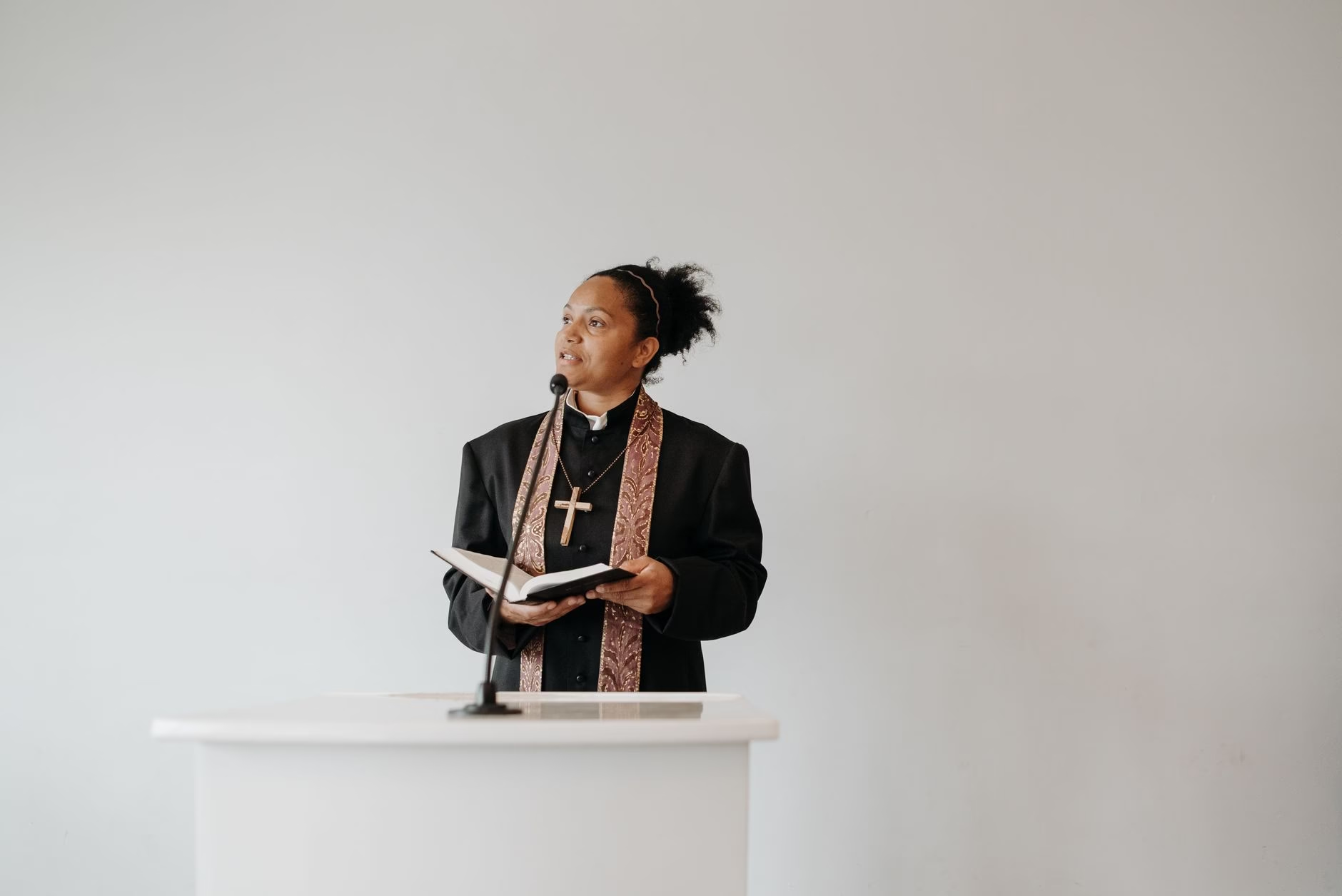
The question of female pastors is one that continues to attract strong opinions among believers today. As more women take roles of leadership within the church, many Christians turn to Scripture to understand what the Bible teaches about women serving as pastors and spiritual leaders. This topic is not only about church roles but also about God’s design, spiritual gifts, and how every believer is called to serve the body of Christ.
Understanding what the Bible says about female pastors helps us to approach this issue with humility, wisdom, and respect for God’s Word. It also allows the church to recognize and honor the many ways God uses women for His purpose. This discussion invites us to search Scripture carefully and prayerfully to discern God’s plan for leadership and ministry among His people.
The Biblical Foundation of Church Leadership
The structure of leadership in the early church was guided by Scripture and the direction of the Holy Spirit. The New Testament describes roles such as elders, overseers, teachers, and deacons, each with defined responsibilities. In considering the question of female pastors, it is important to begin with these foundational passages.
Related Posts:
1 Timothy 3:1–2 says, “Here is a trustworthy saying: Whoever aspires to be an overseer desires a noble task. Now the overseer is to be above reproach, faithful to his wife, temperate, self-controlled, respectable, hospitable, able to teach.”
This passage outlines the characteristics required of church leaders. The use of masculine language here has been interpreted in different ways. Some Christians see it as limiting pastoral leadership to men, while others believe the principles of character and faithfulness apply to all believers, men and women alike.
The key idea in this passage is not gender hierarchy but godly character. Every leader, regardless of gender, must reflect the heart of Christ and lead with wisdom and integrity.
Women in Leadership During Biblical Times
The Bible includes several accounts of women who played vital leadership roles among God’s people. Their stories reveal that God has always chosen and equipped women for missions, leadership, and prophetic ministry.
- Deborah served as a judge and prophetess, leading Israel through a time of difficulty and delivering them under God’s direction (Judges 4:4–5).
- Priscilla, along with her husband Aquila, taught the Word of God with authority and helped guide the early church (Acts 18:26).
- Phoebe is described by Paul as a deacon in the church at Cenchreae and as someone who had been a great help to many believers (Romans 16:1–2).
These examples demonstrate that God values faithfulness and obedience more than any human distinction. While church structure and authority differ across contexts, the presence of women who served and led in Scripture cannot be ignored. They were active participants in God’s mission and models of devotion and service.
The Controversial Texts Explained
Some Bible verses have become central to the debate about female pastors, particularly 1 Corinthians 14:34–35 and 1 Timothy 2:11–12. Both passages are often quoted to argue against women teaching or holding positions of authority in the church.
In 1 Timothy 2:11–12, Paul writes, “A woman should learn in quietness and full submission. I do not permit a woman to teach or to assume authority over a man; she must be quiet.”
To interpret this correctly, we must consider the cultural and historical context. Ephesus, where Timothy was ministering, was influenced by pagan practices that elevated female deities and created confusion in matters of worship and authority. Paul’s instruction was given to maintain order and truth within that particular congregation.
Many scholars suggest that Paul’s focus was not a permanent ban on women leaders but a response to specific challenges within the early church. In other letters, Paul commended women such as Junia, who is described as “outstanding among the apostles” (Romans 16:7), showing that women did play significant roles in ministry.
These passages remind us to read Scripture with both faithfulness and discernment. Every word of the Bible is inspired and true, yet understanding its application requires spiritual wisdom and study.
The Heart of Servant Leadership
At the core of Christian leadership is servanthood. Jesus did not define greatness by authority or position but by the willingness to serve. He said, “Whoever wants to become great among you must be your servant” (Matthew 20:26).
This principle applies to both men and women who follow Christ. The call to ministry is not primarily about status but about humility, compassion, and faithfulness to God’s Word. Whether a person carries the title of pastor, teacher, or servant leader, their purpose is to guide others toward Christ and to strengthen the body of believers.
The presence of female pastors in many churches today can be seen as part of this larger calling to serve and to proclaim the gospel. What matters most is not the title but the fruit of the ministry. When a leader, male or female, bears the fruit of the Holy Spirit, the church benefits and Christ is glorified.
Practical Reflection for Today’s Church
The modern church must strive for unity rather than division over this topic. As believers, we are encouraged to follow the example of the Bereans in Acts 17:11, who “examined the Scriptures every day to see if what Paul said was true.”
Churches should prayerfully consider the gifts and callings that God has placed within each member. If a woman demonstrates strong faith, sound teaching, and a life that honors God, her ministry can be a powerful testimony of God’s work in His people.
Likewise, all believers—men and women—should commit to studying God’s Word, growing in spiritual maturity, and using their unique gifts to serve others. A church that encourages every member to live out their calling will flourish and bring glory to Christ.
Key Lessons
- God values faithfulness, humility, and obedience more than status or gender.
- Women played influential leadership roles throughout the Bible, showing that God calls both men and women to serve Him.
- Scripture must be interpreted carefully and within its cultural and historical context.
- True leadership in the church means serving others with love and humility.
- The church should nurture the spiritual gifts of all believers and encourage unity in Christ.
Conclusion
The discussion about female pastors invites believers to return to the heart of Scripture and to the example of Jesus Christ. While differences of interpretation exist, the ultimate goal of ministry remains the same—to glorify God and to build up His church.
Rather than focusing on division, we are called to walk in love and truth, recognizing that God empowers each believer to serve according to His will. When men and women alike surrender their gifts to the Lord, the church becomes a more complete reflection of Christ’s body.
Every believer is called to seek God’s wisdom, rely on His Word, and serve faithfully in the place where He has planted them. May we allow the Holy Spirit to guide us in understanding, so that our churches become places where His Word is honored and His people are united in love and service.
Further Reading
BIBLE VERSES ABOUT BLACK PEOPLE
BIBLE VERSES ABOUT LATENESS TO CHURCH
BIBLE VERSES ABOUT GOD PROTECTING US FROM OUR ENEMIES