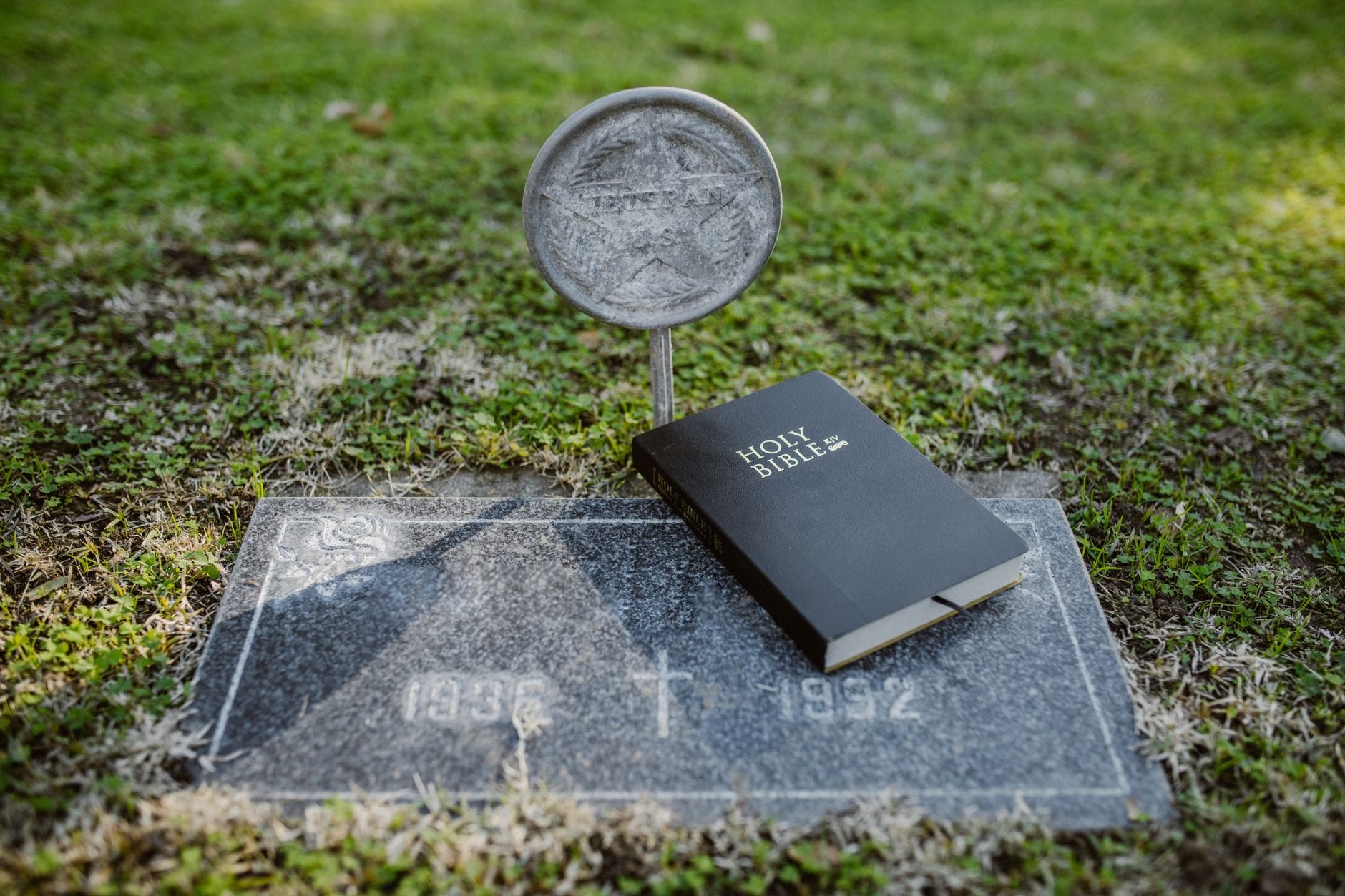
BIBLE VERSES ABOUT PROPER BURIAL
Introduction
The Bible speaks deeply about the sanctity of life, the dignity of the human body, and the importance of honoring the deceased. Throughout Scripture, the practice of proper burial is not only a sign of respect for the dead but also a reflection of hope in the resurrection. In a world where burial practices differ across cultures and beliefs, it is essential for Christians to understand what the Word of God teaches about this subject.
Proper burial in the Bible symbolizes respect, love, and faith in God’s promise of eternal life. Whether we read about Abraham burying Sarah, Jesus being laid in a tomb, or believers preparing the bodies of loved ones, we find lessons about reverence, faithfulness, and the hope of resurrection. This topic guides believers to see death not as an end, but as a transition into the eternal presence of God.
The Biblical View of Burial
From the Old Testament to the New Testament, burial represents an act of honor and faith. In biblical times, burial was the preferred and most common practice when caring for the deceased. It reflected the understanding that the body, though mortal, was created by God and deserves respectful treatment even in death.
Related Posts:

In Genesis 23:19, “After this, Abraham buried Sarah his wife in the cave of the field of Machpelah before Mamre.” This simple record shows how Abraham took care to give Sarah a proper burial, purchasing land and securing a peaceful resting place. This teaches that respect for the dead is part of our duty as people who honor God’s creation.
Burial in biblical culture was more than a cultural practice. It reflected faith in the promise that those who die in God will rise again. Ecclesiastes 3:20 reminds us, “All go to one place. All are from the dust, and all return to dust.” This verse calls believers to remember that our earthly bodies return to the ground, but our spirits return to God who gave them.
Examples of Proper Burial in the Old Testament
The Old Testament gives several accounts of godly people being buried with honor and care. These examples teach us about reverence, love, and obedience toward God’s ways regarding the dead.
1. The Burial of Jacob and Joseph
In Genesis 50:13, Jacob’s sons carried him to the land of Canaan and buried him in the cave of the field of Machpelah, the same place where Abraham and Sarah were buried. This act fulfilled Jacob’s last wish and demonstrated the deep respect his sons had for his faith and heritage.
Joseph also gave clear instructions concerning his burial. Genesis 50:25 records, “Then Joseph took an oath from the children of Israel, saying, God will surely visit you, and you shall carry up my bones from here.” This request showed Joseph’s faith in God’s promise to bring His people to the Promised Land. Even in death, Joseph’s hope rested on the faithfulness of God.
2. The Burial of Moses
In a unique account, Deuteronomy 34:5‑6 says, “So Moses the servant of the Lord died there in the land of Moab… and He buried him in a valley in the land of Moab, opposite Beth Peor.” Moses was buried by the Lord Himself. This demonstrates the great honor God placed upon His faithful servant, showing burial as a sacred act under the care of God.
The Burial of Jesus Christ
The New Testament gives the most powerful example of burial through Jesus Christ Himself. After His crucifixion, His body was laid in a tomb, fulfilling prophecy and symbolizing the sacredness of the human body even in death.
Matthew 27:59‑60 states, “And when Joseph had taken the body, he wrapped it in a clean linen cloth, and laid it in his new tomb which he had hewn out of the rock.” Joseph of Arimathea, a wealthy man and disciple of Jesus, gave his own tomb for the Lord’s burial. This act of love and devotion was a testimony of faith and reverence.
By being buried, Jesus identified fully with humanity, even in death. His resurrection three days later became the ultimate victory over the grave. For Christians today, this affirms the hope that death does not end our story. Burial becomes a reminder of resurrection, showing that just as Christ rose, believers too will rise when He returns.
Proper Burial Reflects Hope in Resurrection
Christian burial practices are rooted in the belief in eternal life. Burial symbolizes the sowing of the body into the ground like a seed that will one day be raised to new life. The apostle Paul beautifully expresses this truth in 1 Corinthians 15:42‑44, describing how the body that is sown in corruption will be raised in incorruption.
A proper burial, therefore, is not simply an act of closure. It is a declaration of faith in Jesus Christ, who said in John 11:25, “I am the resurrection and the life. He who believes in Me, though he may die, he shall live.” When we lay a believer to rest, we proclaim this unshakable hope that life continues beyond the grave.
Spiritual Meaning Behind Honoring the Body
The human body is created by God and bears His image. Even after death, Christians are called to treat the body with respect because it served as a vessel for the soul. Proper burial mirrors the truth that every life matters before God.
1 Corinthians 6:19‑20 reminds us, “Do you not know that your body is the temple of the Holy Spirit who is in you… therefore glorify God in your body and in your spirit which are God’s.” This verse helps believers remember that respect for the body continues even after death. Burials performed with love and dignity demonstrate gratitude for the life God has given.
Key Lessons
- Proper burial in Scripture shows respect for God’s creation and faith in His promises.
- Burial is a visible expression of hope in the resurrection of the dead.
- Believers are called to treat the human body with dignity, even after death.
- The examples of Abraham, Jacob, Joseph, and Jesus teach us that burial is not just tradition but a sacred act of faith.
- Honoring the deceased is an act of love, faithfulness, and submission to God’s will.
Conclusion
The Bible consistently upholds the practice of proper burial as a meaningful and faith‑filled act. From the patriarchs of the Old Testament to the resurrection of Jesus Christ, burial represents both final respect for the body and anticipation of eternal life. Christians understand that death is not the end, but a doorway to God’s everlasting presence.
As believers, we should approach burial with hearts full of faith and hope, knowing that those who die in Christ will live again. When we honor the bodies of our loved ones, we declare the sacred worth of every life and the glorious promise that we will one day be reunited in the resurrection.
Further Reading
BIBLE VERSES ABOUT BLACK PEOPLE
BIBLE VERSES ABOUT LATENESS TO CHURCH
BIBLE VERSES ABOUT GOD PROTECTING US FROM OUR ENEMIES