BIBLE VERSES ABOUT ETHIOPIA
Introduction
Throughout Scripture, Ethiopia is mentioned several times, revealing a rich and meaningful connection between this historic nation and the unfolding plan of God. Known in ancient times as Cush, Ethiopia represents one of the earliest civilizations in biblical history. The references to Ethiopia in the Bible are not just geographical, but also symbolic, pointing to God’s sovereignty over all nations and His invitation for every people to know Him.
For believers today, discovering what the Bible says about Ethiopia helps us appreciate God’s inclusive love and His desire to bring salvation to all corners of the earth. It also reminds us that His promises are not limited by race, language, or national boundaries. Let us explore several important Bible verses about Ethiopia and the spiritual truths they reveal.
Ethiopia in the Old Testament: A Nation Known to God
Ethiopia, or Cush, is mentioned early in the Bible, connecting it directly to God’s creation and His global purposes. In Genesis 2:13, it says, “The name of the second river is the Gihon; it winds through the entire land of Cush.” This verse situates Ethiopia in the context of Eden, reminding us that from the beginning, Africa was part of God’s created world and His divine story.
Related Posts:
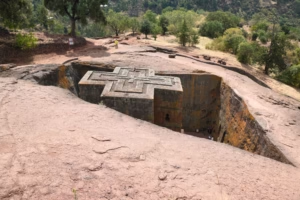

Ethiopia also appears in prophetic writings. Isaiah 18:1-2 speaks of “the land of whirring wings beyond the rivers of Cush,” referring to messengers being sent from this region. Though scholars debate the exact interpretation, it reflects that Ethiopia was known as a powerful and influential kingdom, respected even by other nations. God wanted His message to reach these distant places.
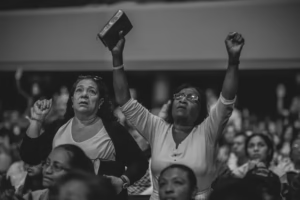
In Psalm 68:31, the psalmist proclaims, “Princes shall come out of Egypt; Ethiopia shall soon stretch out her hands unto God.” This beautiful verse points to the day when the nations of Africa would recognize and worship the Lord. Ethiopia stretching out her hands to God represents humility, prayer, and surrender. It is a prophetic image of the gospel reaching all nations.
Ethiopia and the Reign of Solomon
Another fascinating reference occurs in the story of the Queen of Sheba found in 1 Kings 10:1-13. Although Sheba is often associated with a region around present-day Ethiopia and Yemen, many traditions link her kingdom strongly to Ethiopian heritage. The Queen of Sheba visited King Solomon after hearing of his wisdom. She came with gifts of gold, precious stones, and spices, seeking to learn about his God and his kingdom.
This encounter symbolizes the attraction of godly wisdom and the fame of God’s name among the nations. The Queen’s visit demonstrates how nations beyond Israel were already being drawn to the light of God’s truth. Jesus later refers to her in Matthew 12:42, saying, “The Queen of the South will rise at the judgment with this generation and condemn it.” Her willingness to seek wisdom contrasts with those who reject the truth within their own reach.
Through this story, Ethiopia’s connection with biblical history becomes clear. It shows that God’s truth is magnetic, reaching even the most distant rulers and nations who sincerely seek Him.
Ethiopia in the New Testament: The Ethiopian Eunuch
One of the most impactful mentions of Ethiopia in Scripture is found in the book of Acts. In Acts 8:26-39, Philip, one of the early Christian evangelists, is led by the Holy Spirit to meet an Ethiopian eunuch who served as a high official under Queen Candace of Ethiopia.
The eunuch was traveling from Jerusalem, where he had gone to worship. As he read from the book of Isaiah, Philip explained the meaning of the passage, pointing to Jesus Christ as the fulfillment of prophecy. The man believed, and they stopped by some water where Philip baptized him.
This story carries great significance. It marks one of the earliest records of the gospel reaching Africa, showing that salvation through Christ is open to every nation. The Ethiopian official returned home as a witness of the risen Christ, likely becoming a pioneer of Christianity in his land.
For believers today, the account of the Ethiopian eunuch reminds us that God leads people who are hungry for truth. It also encourages us to be ready and obedient like Philip, willing to share the message of Jesus wherever the Spirit guides us.
Prophetic Promises Concerning Ethiopia
Several prophetic passages reveal that Ethiopia will play a part in God’s future plans. In Zephaniah 3:10, it is written, “From beyond the rivers of Cush, my worshipers, the daughter of my dispersed people, will bring me offerings.” This expresses God’s global vision for worship. His followers from Ethiopia and every other nation will unite in praise and service to Him.
Similarly, Isaiah 45:14 mentions, “The products of Egypt and the merchandise of Cush… will come over to you and be yours.” This verse speaks of nations recognizing the true God and coming under His rule. Ethiopia is thus seen as part of the ultimate fulfillment of God’s kingdom on earth.
Ethiopia represents the reach of the gospel beyond boundaries and demonstrates how God’s salvation plan is unfolding through all continents. It is a message of hope for every generation and a reminder that the love of Christ knows no limits.
Modern Reflections on Ethiopia’s Biblical Role
Ethiopia’s presence in Scripture can inspire today’s believers in several ways. First, it highlights God’s inclusiveness. Ethnic background or geographical location never prevents anyone from experiencing His grace. Second, it teaches us to value diversity in the body of Christ. The church is made up of believers from every nation who praise God together in unity. Finally, it renews our vision for global missions. Just as the gospel reached an Ethiopian traveler through Philip’s obedience, we are called to share faith with those who may be searching for truth in our modern world.
Key Lessons
- God’s plan includes all nations, and Ethiopia stands as a symbol of His inclusive grace.
- Prophecies about Ethiopia reflect God’s desire for global worship.
- The story of the Ethiopian eunuch shows the power of personal evangelism guided by the Holy Spirit.
- The Queen of Sheba’s visit to Solomon reminds us that genuine seekers find wisdom in God’s truth.
- Believers today are called to stretch out their hands to God in worship and service, just as Ethiopia is depicted in the Psalms.
Conclusion
The story of Ethiopia woven throughout Scripture is a testimony of God’s boundless love and universal invitation. From the land of Cush mentioned near Eden to the prophetic declarations of worshippers coming from its rivers, Ethiopia stands as a witness that God’s salvation extends to every part of the earth. The Queen of Sheba’s search for wisdom and the Ethiopian eunuch’s conversion both reveal God’s desire for hearts that seek Him with sincerity.
As believers reflect on these verses about Ethiopia, we are reminded to celebrate diversity within the global church and to share the message of Christ beyond our borders. May we, like Ethiopia, stretch out our hands in worship and devotion, bringing glory to the God who reigns over all nations.
Further Reading
BIBLE VERSES ABOUT BLACK PEOPLE
BIBLE VERSES ABOUT LATENESS TO CHURCH
BIBLE VERSES ABOUT GOD PROTECTING US FROM OUR ENEMIES