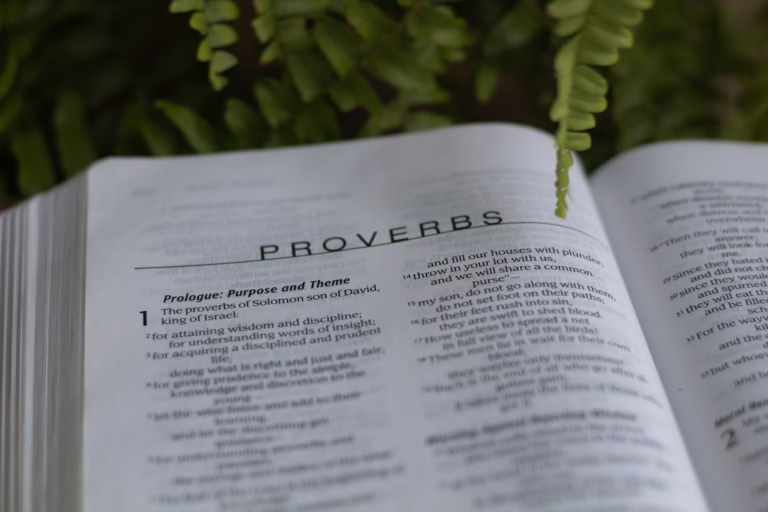
Short answer: The concept of tithing, referring to giving ten percent, is rooted in the Bible. Key verses include Genesis 14:20, where Abram gives a tenth to Melchizedek, and Leviticus 27:30, which states that a tithe belongs to the Lord.
The Ten Percent Tithe: Exploring Its Biblical Roots and Modern Interpretations
In the realm of religious traditions, few practices are as enduring and universally recognized as tithing. For many believers, the concept of contributing ten percent of their income to their place of worship is both a spiritual duty and a testament of faith. But where does this ten percent tithe originate, and what does it signify in both ancient and contemporary contexts? Let's delve into the Bible verses that reference this practice and explore its relevance today.
Understanding Tithing: A Biblical Overview
The word "tithe" comes from the Old English word "teogotha," meaning "tenth." In the Bible, tithing is primarily introduced in the Old Testament, where it serves as both a practical and spiritual guideline.
The Genesis of Tithing
Abram's Offering to Melchizedek
In Genesis 14:18-20, Abram (later Abraham) offers a tenth of his spoils of war to Melchizedek, the king of Salem and priest of the Most High God. This act is often seen as the first acknowledgment of tithing in the Bible:- Genesis 14:20 – "And blessed be God Most High, who delivered your enemies into your hand. Then Abram gave him a tenth of everything."
Jacob’s Vow at Bethel
Continuing the tradition, Jacob promises God a tenth of everything upon his safe return home:- Genesis 28:22 – “And this stone that I have set up as a pillar will be God’s house, and of all that you give me I will give you a tenth.”
Tithing Under Mosaic Law
Levitical Support
As outlined in Leviticus, Numbers, and Deuteronomy, tithes were fundamental to the sustenance of the Levitical priesthood and the temple:- Leviticus 27:30 – “A tithe of everything from the land, whether grain from the soil or fruit from the trees, belongs to the Lord; it is holy to the Lord.”
- Numbers 18:21 – "I give to the Levites all the tithes in Israel as their inheritance in return for the work they do while serving at the tent of meeting."
Deuteronomy’s Perspective
In Deuteronomy, tithing extends beyond religious duties to incorporate community welfare, emphasizing providing for the widow, orphan, and foreigner:- Deuteronomy 14:28-29 – “At the end of every three years, bring all the tithes of that year's produce and store it in your towns, so that the Levites…and the foreigners, the fatherless and the widows who live in your towns may come and eat and be satisfied.”
Tithing in Modern Religious Practice
While the biblical concept of tithing is well-documented, its interpretation and application have evolved across different denominations and cultural contexts. Here's how tithing fits into modern religious life:
Contemporary Views on Tithing
- Christian Denominations
- Mainstream Protestantism and Catholicism emphasize voluntary giving often informed by biblical principles, with variations in whether tithing is seen as a strict ten percent.
- Evangelicals and Pentecostals frequently emphasize tithing as a scriptural mandate that reflects both trust in God and commitment to the community.
- Theological and Practical Interpretations
- Some view tithing strictly as a biblical law, others as a personal commitment between the individual and God.
- Practical considerations often influence how tithes are calculated, whether from gross or net income.
Tithing Beyond Christianity
Tithing or similar practices appear in other religions, underscoring its universal theme of generosity and support:
- Islam practices zakat, an obligatory form of almsgiving and religious tax.
- Buddhism stresses dana, a concept of giving without expectation of return.
Conclusion: The Enduring Significance of Tithing
In traversing the historical and theological landscape of tithing, we uncover a tradition rich with spiritual significance and practical purpose. Whether viewed through the lens of ancient scriptural practice or adapted to contemporary life, tithing remains a powerful expression of faith and community support. For believers, the act of giving ten percent is not merely financial—it's an enduring testament of trust, generosity, and devotion that continues to shape religious landscapes today.
Engage with us! How has your understanding or practice of tithing evolved over time? Share your thoughts in the comments below.
Key Takeaways
- Tithing is introduced in the Bible with Abram's offering of a tenth to Melchizedek.
- Levitical laws in Leviticus and Numbers establish the practice of tithing for priestly support.
- In modern Christianity, tithing interpretations vary among different denominations.
- The act of tithing reflects trust in God and commitment to community welfare.
Understanding Your Tithe
Consider how you define and calculate your tithe, whether from gross or net income. Reflecting on the spiritual significance can help deepen your commitment.
Frequently Asked Questions
Where in the Bible does it mention tithing?
Key verses include Genesis 14:20, Leviticus 27:30, and Deuteronomy 14:28-29.
Is tithing a law that Christians must follow?
Views on tithing vary; some see it as a biblical mandate while others view it as a personal commitment.
Can I tithe in ways other than money?
Yes, tithing can also include time and talents as forms of service to God and community.
What is the purpose of tithing?
Tithing serves both to support the church and to remind believers of their trust in God's provision.
The Bottom Line
Tithing remains a meaningful practice that connects believers to their faith and community. Reflecting on its biblical roots can inspire a deeper understanding of generosity and trust in God.