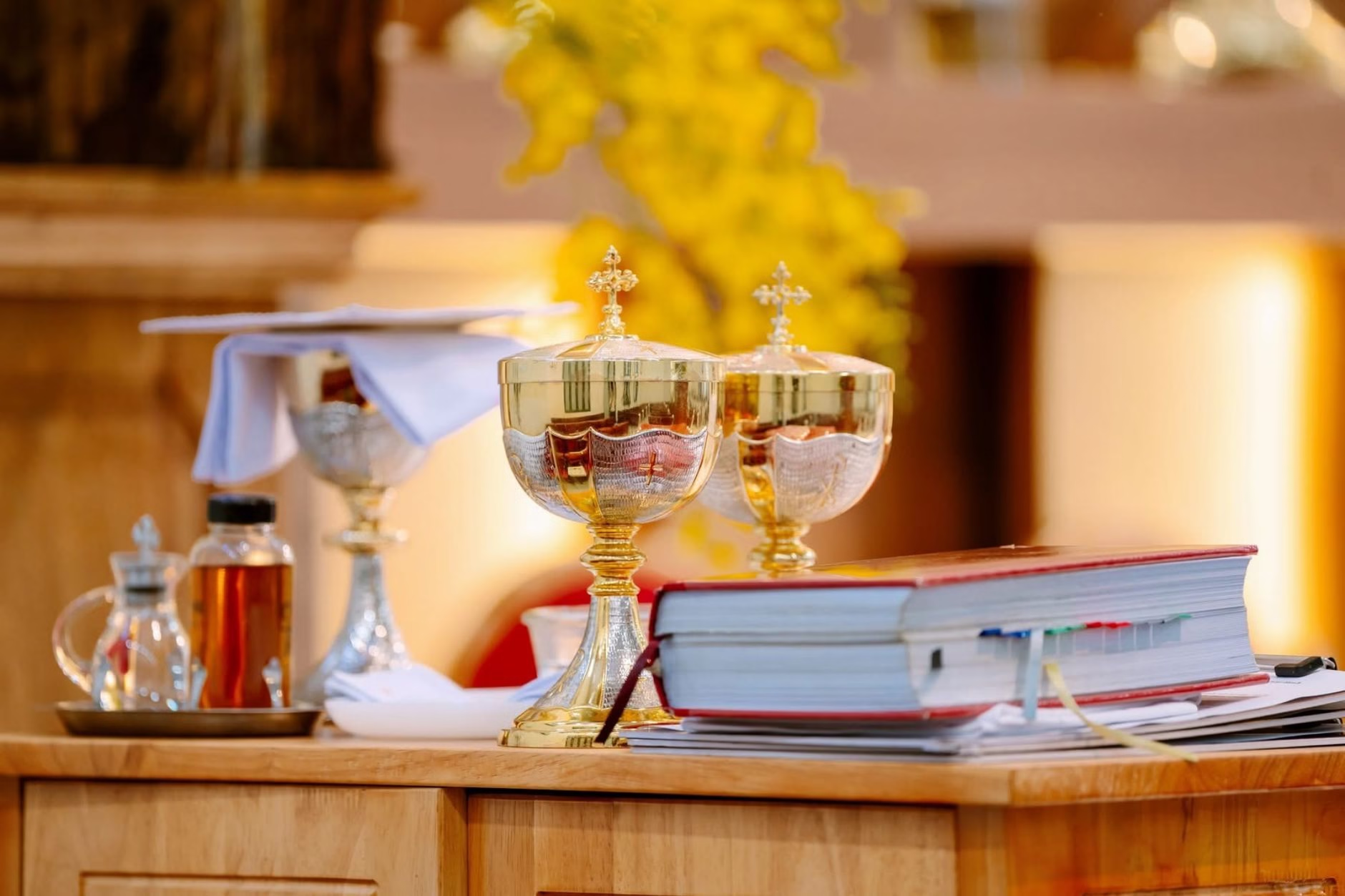
When we approach the communion table, we step into a sacred mystery that spans thousands of years and unites believers across every generation. Small pieces of bread and humble cups of juice or wine might seem simple on the surface, yet they carry an overwhelming depth of meaning. The Lord’s Supper is not merely a solemn memorial service for a fallen friend, nor is it an empty ritual to check off during a church service. It is a vital, living encounter with Jesus Christ.
Scripture gives rich, multifaceted insight into what takes place when the church gathers around the table. By meditating on these core passages, we discover that communion is an invitation to remember our Redeemer, proclaim His ultimate victory, draw near in Christian fellowship, and nourish our souls on the living Lord.
The Sacred Words of Institution
In the Upper Room, on the night He was betrayed, Jesus transformed the ancient Passover meal into something radically new. He took the Passover bread—which had long recalled the hasty flight of Israel from Egyptian bondage—and declared that it now pointed directly to His own broken body. He took the cup of redemption and declared it to be the new covenant established in His blood.
The Apostle Paul passed down this essential foundation to the church in Corinth:
“For I received from the Lord what I also delivered to you, that the Lord Jesus on the night when he was betrayed took bread, and when he had given thanks, he broke it, and said, ‘This is my body, which is for you. Do this in remembrance of me.’ In the same way also he took the cup, after supper, saying, ‘This cup is the new covenant in my blood. Do this, as often as you drink it, in remembrance of me.'” – 1 Corinthians 11:23-25
When Jesus commands His followers to “do this in remembrance of me,” the biblical concept of remembrance implies far more than bringing an old memory to mind. In scripture, holy remembrance means actively drawing the reality and power of a past saving event into our present experience. When you take the bread, you are not simply recalling a historical event from two millennia ago; you are fixing your heart upon the present truth that Christ’s sacrifice was made specifically for you.
A Holy Proclamation Across Time
Communion functions as a sermon preached without human eloquence. Every time believers break bread and share the cup, they proclaim a profound message to one another, to the watching world, and to the spiritual realm.
Paul highlights this ongoing testimony in his first letter to the Corinthians:
“For as often as you eat this bread and drink the cup, you proclaim the Lord’s death until he comes.” – 1 Corinthians 11:26
This single verse connects three distinct dimensions of time:
- The Past: We anchor our hearts in the finished work of the cross, where Jesus paid the full debt of our sin once and for all.
- The Present: We declare His current lordship over our lives and our total, daily dependence upon His sustaining grace.
- The Future: We look ahead with eager expectation to His return, knowing that this earthly meal prefigures the great Marriage Supper of the Lamb.
Each time you take communion, you reaffirm your allegiance to King Jesus and confess that His death is the sole ground of your salvation until He returns in glory.
Koinonia: The Unity of the Table
It can be tempting to view communion strictly as a private spiritual exercise between an individual and God. While personal devotion is essential, Scripture emphasizes that the Lord’s Supper is fundamentally a shared meal. The table is where our horizontal relationships with fellow believers intersect with our vertical relationship with God.
Addressing the shared nature of this ordinance, Paul writes:
“The cup of blessing that we bless, is it not a participation in the blood of Christ? The bread that we break, is it not a participation in the body of Christ? Because there is one bread, we who are many are one body, for we all partake of the one bread.” – 1 Corinthians 10:16-17
The original Greek word for “participation” or “communion” is koinonia, which describes intimate, covenantal fellowship and shared life. Gathering at the table reminds us that human divisions—whether social, economic, or cultural—have no standing in the family of God. Rich and poor, young and old, long-time believers and new believers all eat from the same bread and drink from the same cup.
Because we share in one loaf—Christ Himself—we are reminded of our deep call to unity. We cannot genuinely honor the Host of the table while holding onto division, bitterness, or unforgiveness toward those sitting beside us. Communion bids us to lay down our offenses and walk in active reconciliation within the local church.
The Call to Self-Examination
Because the elements represent the sacred body and blood of Christ, Scripture cautions us against taking communion carelessly or out of mere routine.
The Apostle Paul gives clear guidance regarding heart preparation before receiving the elements:
“Let a person examine himself, then, and so eat of the bread and drink of the cup.” – 1 Corinthians 11:28
Self-examination is not designed to drive us away from the table in fear or unworthiness. If moral perfection were required to participate, every chair at the table would remain empty. The Lord’s Supper is not a reward for the righteous; it is spiritual medicine for the weak and grace for the contrite heart.
To examine yourself means to approach the table with open, honest humility. It means searching your heart, confessing known sin, repenting of self-reliance, and resting entirely upon Christ’s mercy. It means acknowledging that you cannot save yourself and receiving the gifts of God with reverent gratitude.
Feasting on the Bread of Life
Well before the Last Supper in the Upper Room, Jesus spoke of the spiritual reality that bread represents. After feeding the five thousand, He turned the crowd’s attention from temporary physical food to the eternal sustenance found in Him alone.
Jesus revealed His identity with these words:
“Jesus said to them, ‘I am the bread of life; whoever comes to me shall not hunger, and whoever believes in me shall never thirst.'” – John 6:35
Our physical bodies quickly grow weak without daily nourishment. In the same way, our spiritual lives wither when we try to satisfy our souls on the temporary offers of the world. In communion, Christ calls us to feast upon Him through faith—to feed our hearts on His promises, His righteousness, and His perfect love.
When you hold the bread and the cup, let your spirit respond with trust. Remind yourself that Christ satisfies the deepest longings of your soul. He is your strength in season of weakness, your comfort in sorrow, and your eternal hope.
Approaching the Table with Expectation
The biblical passages concerning communion reveal a glorious gift given to the church. The Lord’s Supper is a sacred meeting place where memory turns into worship, where shared participation deepens our unity, and where weary hearts find fresh grace in the broken body and shed blood of Jesus Christ.
The next time you take the elements, take a moment to pause. Set aside the distractions of the week and fix your gaze upon the Lamb of God who takes away the sin of the world. Come hungry for His presence, honest about your need, reconciled with your brothers and sisters, and full of joy for the day He brings us all home to feast in His kingdom forever.