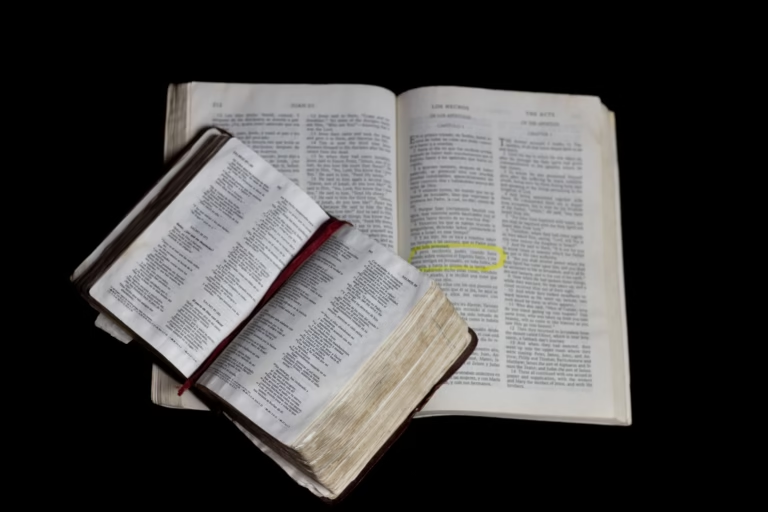
Short answer: Bible verses about sorcery include Galatians 5:19-21 and Deuteronomy 18:10-12. These passages warn against sorcery as it opposes God’s authority and moral order.
The topic of sorcery has fascinated and often bewildered people throughout history. From literary references to modern-day discussions about magic, it’s clear that the idea of manipulating unseen forces remains deeply embedded in our culture. Many turn to the Bible for guidance and understanding about sorcery and its implications. In this post, we will explore key verses from the King James Version (KJV) of the Bible that address sorcery, shedding light on the spiritual truths and warnings it conveys.
What Is Sorcery?
Before diving into scripture, it's essential to define what sorcery is. Sorcery generally refers to the practice of using supernatural powers, often through spells, rituals, or other occult means, to influence events or outcomes. In biblical contexts, sorcery often represents a direct challenge to God’s sovereignty and moral order.
Common Terms in the Bible Related to Sorcery:
- Sorcery: The act of practicing magic, often associated with deceit.
- Witchcraft: A subset of sorcery involving the invocation of evil spirits.
- Divination: Seeking knowledge of the future through supernatural means.
Key Bible Verses About Sorcery
Let’s look at some of the primary Bible verses that address sorcery and how they relate to faith and morality.
Galatians 5:19-21 (KJV)
"Now the works of the flesh are manifest, which are these; Adultery, fornication, uncleanness, lasciviousness,
Idolatry, witchcraft, hatred, variance, emulations, wrath, strife, seditions, heresies,
Envyings, murders, drunkenness, revellings, and such like: of the which I tell you before,
as I have also told you in time past, that they which do such things shall not inherit the kingdom of God."
This passage underscores how sorcery is categorized among other sinful behaviors. It emphasizes that those who engage in such practices are distancing themselves from the kingdom of God.
Deuteronomy 18:10-12 (KJV)
"There shall not be found among you any one that maketh his son or his daughter to pass through the fire,
or that useth divination, or an observer of times, or an enchanter, or a witch,
Or a charmer, or a consulter with familiar spirits, or a wizard, or a necromancer.
For all that do these things are an abomination unto the LORD: and because of these abominations,
the LORD thy God doth drive them out from before thee."
In this profound declaration, God outlines the practices that are seen as abominable. The verse serves as a clear warning against engaging in sorcery and related activities.
Revelation 21:8 (KJV)
"But the fearful, and unbelieving, and the abominable, and murderers, and whoremongers, and sorcerers,
and idolaters, and all liars, shall have their part in the lake which burneth with fire and brimstone:
which is the second death."
Here, sorcery is placed among the gravest sins, reaffirming the seriousness of turning away from God’s path through such practices.
The Biblical Perspective on Sorcery: Key Themes
1. Rejection of God’s Authority
Many verses (e.g., Isaiah 47:12-14) highlight that engaging in sorcery is seen as rejecting God's authority. This form of rebellion not only seeks empowerment but disrupts one’s relationship with the Divine.
2. The Danger of Deception
Sorcery is often associated with deception. Those who practice it may encourage others to seek alternative means of guidance rather than relying on God.
- Examples of Deceptive Practices:
- Tarot card reading
- Astrology
- Crystal ball gazing
3. Moral Consequences
The repercussions outlined in scripture are severe. They hint at not only spiritual exile but also the broader implications of living outside of God’s will.
4. A Call for Redemption
Though the tone of the verses might appear harsh, they ultimately serve as a call to repentance. The Bible consistently encourages individuals to turn away from sinful behavior and reconciliate with God.
Conclusion: Embracing the Light
Sorcery is a significant theme in the Bible, and the scriptures make it clear that such practices are contrary to the teachings of God. These verses do not merely serve as warnings but also urge us to deepen our reliance on the Divine rather than seek alternatives.
When grappling with the allure of sorcery and occult practices, let us anchor our hearts in faith and scripture, seeking the wisdom and guidance of God. After all, the most powerful force in the universe transcends any act of sorcery—the love and grace of our Lord.
Embrace God’s light, and turn away from darkness. By aligning ourselves with His will, we can profoundly experience true spiritual fulfillment without the entrapments of sorcery.
Key Takeaways
- Sorcery is listed among serious sins in Galatians 5:19-21.
- Deuteronomy 18:10-12 identifies sorcery as an abomination to God.
- Engaging in sorcery signifies a rejection of God's authority.
- The Bible calls for repentance from sinful practices, including sorcery.
Stay Grounded in Faith
When faced with temptations of sorcery, anchor yourself in scripture and prayer. Seek God's guidance to strengthen your spirit against deception.
Frequently Asked Questions
What does the Bible say about witchcraft?
The Bible explicitly warns against witchcraft and sorcery, labeling them as abominations in Deuteronomy 18:10-12.
Is sorcery mentioned in the New Testament?
Yes, sorcery is mentioned in Galatians 5:19-21, where it is called one of the works of the flesh.
Can Christians practice fortune-telling?
Fortune-telling is considered a form of divination and is condemned in the Bible, as seen in Deuteronomy 18:10-12.
What are the consequences of practicing sorcery according to the Bible?
Practicing sorcery leads to severe spiritual consequences, including exclusion from the kingdom of God, as indicated in Revelation 21:8.
The Bottom Line
The Scriptures provide clear guidance against sorcery, urging believers to uphold their faith in God. Turning toward God instead of seeking alternative powers strengthens our relationship with Him and illuminates our path.