BIBLE VERSES ABOUT SACRIFICES
Introduction
Throughout the Bible, the concept of sacrifice is woven deeply into the story of God’s relationship with His people. In the Old Testament, sacrifices were central to worship, representing repentance, thanksgiving, and devotion. In the New Testament, sacrifice takes on its highest form through Jesus Christ, whose death on the cross fulfilled every offering ever made.
For believers today, understanding biblical sacrifices helps us grasp the magnitude of God’s love and the call to live a life of surrender and service. Though we no longer offer animals or grain on an altar, Scripture teaches that we are called to offer our lives as living sacrifices. Learning what this means shapes our worship and our obedience to God in a profound way.
The Old Testament Foundation of Sacrifice
Before the cross, sacrifices played a crucial role in maintaining fellowship between God and His people. The offering of animals and food represented atonement, gratitude, and dedication.
Leviticus 1:4 says, “You are to lay your hand on the head of the burnt offering, and it will be accepted on your behalf to make atonement for you.” This verse reveals that sacrifice was not simply a ritual. It symbolized substitution—one life given to restore another. Through this system, Israel learned about the holiness of God and the seriousness of sin.
Different types of sacrifices were commanded: burnt offerings, peace offerings, sin offerings, and guilt offerings. Each one carried spiritual meaning. Burnt offerings expressed total devotion. Sin offerings confessed wrongdoing and sought forgiveness. Peace offerings celebrated harmony with God and others.
Although these sacrifices had great spiritual significance, they were temporary. They pointed forward to a greater sacrifice yet to come.
The Perfect Sacrifice of Jesus Christ
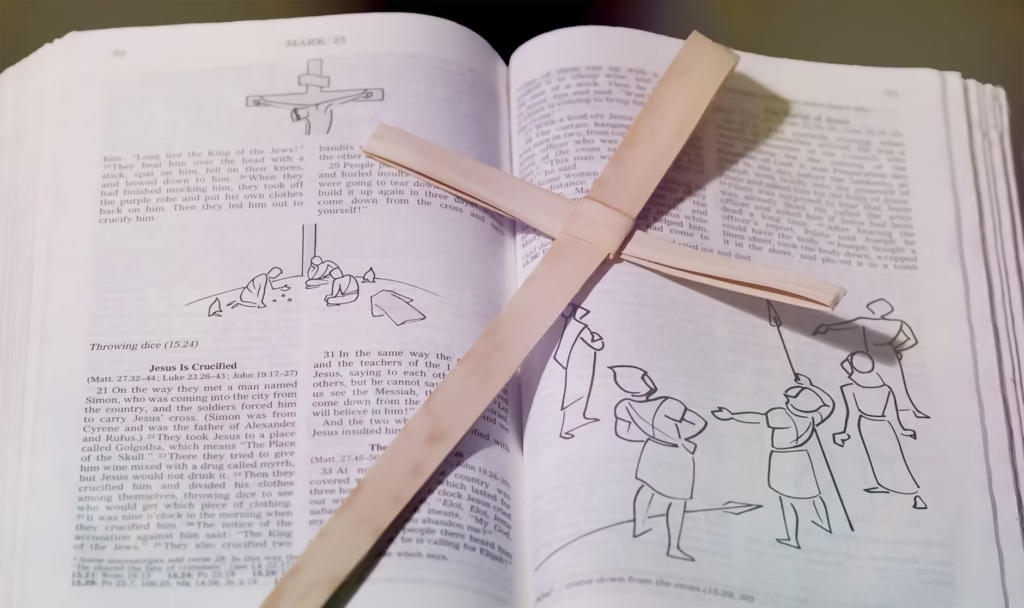
The New Testament reveals that all sacrifices find their completion in the person and work of Jesus Christ. The writer of Hebrews declares, “He has appeared once for all at the culmination of the ages to do away with sin by the sacrifice of himself” (Hebrews 9:26).
No longer would the blood of animals be required. Christ’s death fulfilled the law’s demands and reconciled humanity to God. His sacrifice was perfect and eternal.
John 1:29 records John the Baptist saying, “Look, the Lamb of God, who takes away the sin of the world!” This powerful declaration connects the entire history of sacrifice to Jesus. He became the ultimate Passover Lamb, whose blood protects believers from spiritual death and grants them everlasting life.
For Christians, the cross redefines sacrifice. It is no longer about ritual offerings but about relationship. Through faith in Christ, we receive forgiveness and life. Our response is to live gratefully, walking in holiness and love, because of what He has done.
Living Sacrifices: Our Response to God’s Mercy
Once we recognize the greatness of Christ’s sacrifice, we understand the natural response of the believer—to offer ourselves to God.
Romans 12:1 urges us, *“Therefore, I urge you, brothers and sisters, in view of God’s mercy, to offer your bodies as a living sacrifice, holy and pleasing to God, this is your