Short answer: Key Bible verses about Mother Mary in the New Testament include Luke 1:26-38, highlighting her faith during the Annunciation, and John 19:25-27, showcasing her strength at the crucifixion. These verses reflect her profound role as Jesus’ mother and a model for believers.
Introduction
Mother Mary holds a unique and esteemed position in Christianity, revered not just as the mother of Jesus, but as a figure of faith, strength, and humility. In the New Testament, she is depicted not only during the nativity of Christ but also throughout His life and ministry. This post will delve into key Bible verses that highlight her role, virtues, and profound impact in the New Testament, offering insights that inspire and resonate with believers today.
The Annunciation: A Model of Faith
One of the most significant moments in the life of Mary is the Annunciation, where the angel Gabriel visits her to announce that she will conceive Jesus. This event is captured eloquently in the Gospel of Luke.
Key Verse: Luke 1:26-38
“And the angel said to her, ‘Do not be afraid, Mary, for you have found favor with God. And behold, you will conceive in your womb and bear a son, and you shall call his name Jesus.’”
Insights:
- Acceptance and Faith: Mary’s response, “Let it be to me according to your word,” exemplifies her unwavering faith and submission to God’s will.
- Symbol of Humility: This verse also portrays her humility, accepting a monumental role without hesitance, showcasing her trust in God’s plan.
The Magnificat: A Song of Praise
After the Annunciation, Mary visits her cousin Elizabeth, who is pregnant with John the Baptist. In this encounter, she delivers a powerful hymn known as the Magnificat.
Key Verse: Luke 1:46-55
“My soul magnifies the Lord, and my spirit rejoices in God my Savior…”
Insights:
- Praise and Humility: The Magnificat is a profound expression of worship, highlighting Mary’s deep connection with God and her understanding of His mercy.
- Social Justice Themes: It reflects themes of social justice, as Mary discusses God’s actions toward the humble and the proud, making it a revolutionary song still resonating today.
A Caring Mother: The Wedding at Cana
Mary’s presence at the Wedding at Cana illustrates her practical side as a caring mother, noticing the needs of those around her.
Key Verse: John 2:1-5
“When the wine ran out, the mother of Jesus said to him, ‘They have no wine.’ … His mother said to the servants, ‘Do whatever he tells you.’”
Insights:
- Intercessor: This moment shows her role as an intercessor, bringing forth the needs of others to Jesus.
- Confidence in Jesus: Mary’s directive to the servants emphasizes her belief in Jesus’ power, foreshadowing His first miracle and inviting others to trust in Him.
At the Foot of the Cross: A Testament of Strength
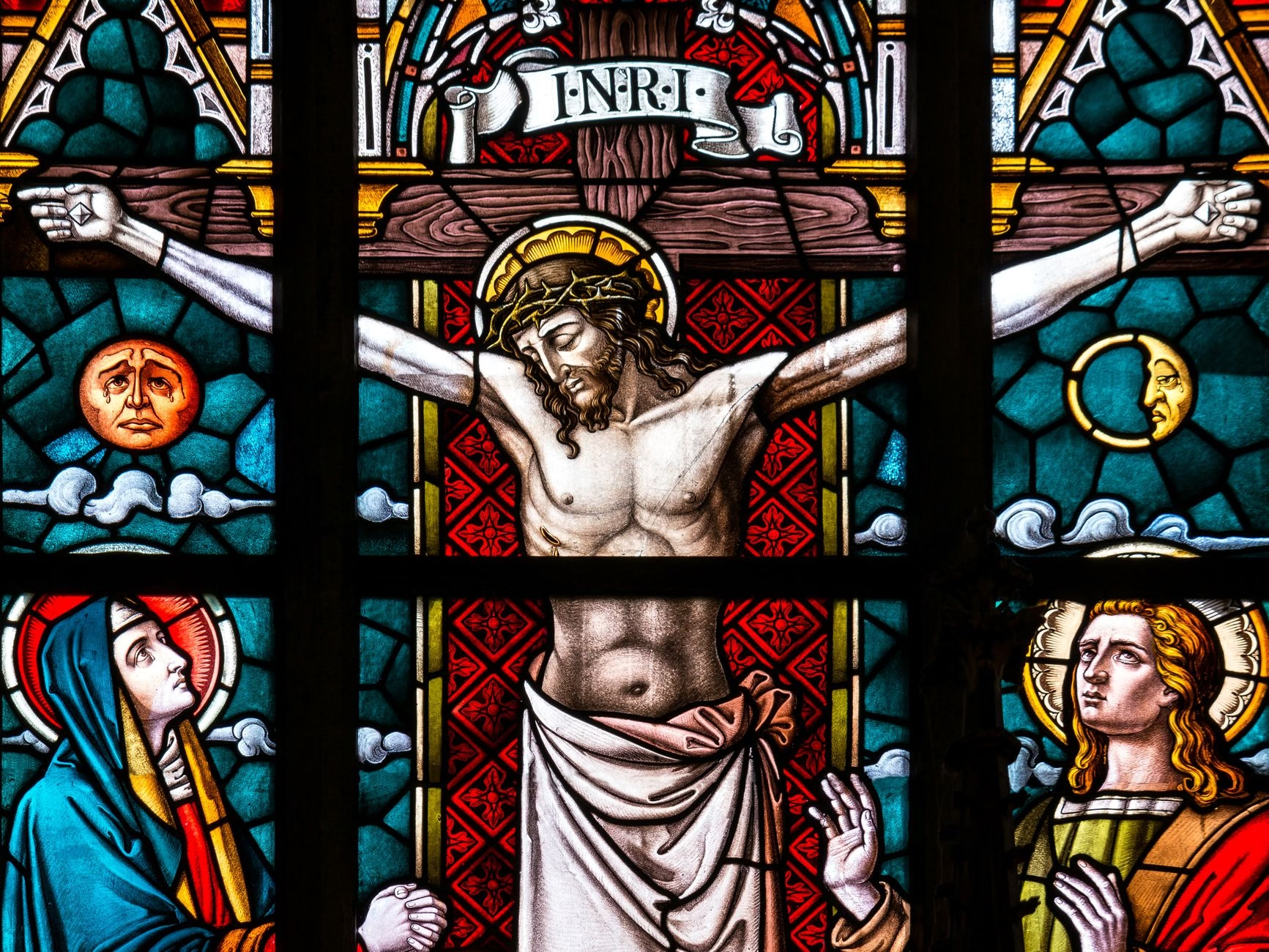
Mary’s presence during the crucifixion of Jesus is one of the most poignant moments in the New Testament, showcasing a mother’s unwavering love and strength amidst suffering.
Key Verse: John 19:25-27
“But standing by the cross of Jesus were his mother and his mother’s sister, Mary the wife of Clopas, and Mary Magdalene. When Jesus saw his mother and the disciple whom he loved standing nearby, he said to his mother, ‘Woman, behold your son!’”
Insights:
- Unbreakable Bond: This verse highlights the deep bond between Mary and Jesus, emphasizing her suffering as she witnesses His pain.
- Mother of the Church: Jesus’ words to Mary and John signify a broader mission for Mary, appointing her as a mother to all believers and establishing her role within the Church community.
Conclusion
Mother Mary is more than just a historical figure; she embodies faith, obedience, and strength. The verses from the New Testament reveal her multifaceted role—accepting God’s will, praising His greatness, nurturing her son, and enduring unimaginable suffering. As we reflect on these biblical accounts, we are reminded of Mary’s example in our spiritual journeys, encouraging us to embrace faith, humility, and a loving heart.
Her legacy continues to inspire countless believers, inviting each of us to cultivate a deeper relationship with God, just as she did. As we celebrate her life, may we seek to reflect her virtues in our own lives, embracing the call to be faithful and courageous amidst life’s challenges.
Key Takeaways
- Mary exemplifies unwavering faith in God's will (Luke 1:26-38).
- Her Magnificat highlights deep worship and social justice themes (Luke 1:46-55).
- At the Wedding at Cana, Mary acts as a caring mother, confident in her son's power (John 2:1-5).
- Her presence at the crucifixion signifies her strength and role as Mother of the Church (John 19:25-27).
Reflect on Mary’s Virtues
Consider how Mary's humility, faith, and strength apply to your own life. Emulating her example can lead to a deeper relationship with God.
Frequently Asked Questions
What is the significance of the Annunciation?
The Annunciation signifies Mary's acceptance of God's plan and her role as the mother of Jesus, showcasing her faith and humility.
What does the Magnificat express?
The Magnificat is Mary's hymn of praise, celebrating God's mercy and justice, reflecting themes of hope and social equality.
How does Mary demonstrate her care at the Wedding at Cana?
Mary shows concern for the couple's needs and encourages trust in Jesus by instructing the servants to follow His guidance.
What role does Mary play at the crucifixion?
Mary's presence at the crucifixion illustrates her deep love and sorrow for Jesus, while He entrusts her to the care of John, symbolizing her role as Mother of the Church.
The Bottom Line
Mary's life offers rich lessons in faith, humility, and resilience. As you reflect on her journey, may you find inspiration to embrace similar virtues in your own spiritual path.