BIBLE VERSES ABOUT BETHLEHEM
Introduction
Bethlehem is one of the most significant places mentioned in Scripture. For many Christians, the name instantly brings to mind the birth of Jesus Christ, the Savior of the world. Yet, Bethlehem’s story began long before the manger scene. This small town in Judea is rich with spiritual meaning, divine prophecy, and powerful lessons about God’s plan of redemption.
Understanding what Scripture says about Bethlehem helps believers see how God works through humble beginnings to fulfill His glorious promises. The Bible shows that God often chooses what seems small and overlooked to accomplish His greatest works. In a world that often values power and prestige, Bethlehem reminds us that God’s plans are written in quiet moments and simple places.
The Meaning and Origin of Bethlehem
The name Bethlehem means “House of Bread,” which already points to deep spiritual symbolism. Bread is the basic food of life, and in Scripture, Jesus calls Himself the Bread of Life. This connection beautifully links the name of the town with Christ’s divine mission.
Related Posts:
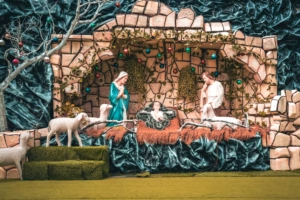
In ancient Israel, Bethlehem was a small, agricultural village located a few miles south of Jerusalem. It was not famous for wealth or influence, yet God had a special plan for it. Micah 5:2 declares, “But you, Bethlehem Ephrathah, though you are small among the clans of Judah, out of you will come for me one who will be ruler over Israel.” This prophecy, written centuries before Jesus was born, revealed that the promised Messiah would come from this humble village.
God often uses small places and ordinary people to reveal His glory. Bethlehem stands as a symbol of how the Lord values humility, faith, and obedience more than worldly importance.
Bethlehem in the Old Testament
Long before the birth of Christ, Bethlehem appeared several times in the Old Testament story. Each reference contributes to the rich spiritual heritage of this town.
In Genesis 35:19, we read that Rachel, the beloved wife of Jacob, was buried near Bethlehem after giving birth to Benjamin. This passage reminds us that Bethlehem has always been connected to deep emotion, love, and covenantal history. Later, in the book of Ruth, Bethlehem becomes the central location of one of the most beautiful love stories in Scripture.
Ruth, a Moabite woman, followed her mother-in-law Naomi back to Bethlehem after their husbands died. There she met Boaz, a man of faith and integrity, and eventually married him. Their great-grandson was David, who was born and raised in Bethlehem. Thus, the city became known as “the City of David.”
Through these early stories, Bethlehem was already a place of redemption, fidelity, and hope. Ruth’s story shows how God’s plan to bring salvation included both Israelites and outsiders. God’s mercy extended to all who chose faith and obedience.
Bethlehem and the Promise of the Messiah
The prophecy in Micah 5:2 clearly pointed to Bethlehem as the birthplace of the future King of Israel. For centuries, the people of Israel waited for this promise to be fulfilled. When the wise men arrived in Jerusalem in Matthew 2:1 to 6, they asked, “Where is the one who has been born king of the Jews?” The chief priests and scribes answered that the Messiah was to be born in Bethlehem, quoting the prophecy from Micah.
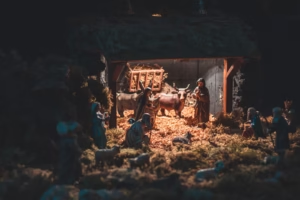
This shows that Bethlehem’s significance was well known among those who studied the Scriptures. Yet despite this knowledge, very few recognized the arrival of the Messiah when He came. Jesus was born in a stable, wrapped in simple cloth, and laid in a manger. His birth in Bethlehem fulfilled every prophecy and revealed that God’s kingdom is established through humility and grace, not worldly grandeur.
Luke 2:4 to 7 describes how Joseph and Mary traveled from Nazareth to Bethlehem for the census, as Joseph belonged to the house and line of David. The journey ended in the fulfillment of divine prophecy. The Bread of Life was born in the House of Bread, bringing spiritual nourishment and eternal life to all who believe in Him.
Bethlehem and the Shepherds’ Encounter
The announcement of Jesus’ birth to the shepherds offers another layer of meaning to Bethlehem’s story. Luke 2:8 to 12 tells how angels appeared to shepherds watching their flocks nearby and proclaimed the good news of great joy. The shepherds then went quickly to Bethlehem to see what the Lord had made known to them.
In doing this, God again demonstrated His heart for the humble and the ordinary. The heavenly message did not come to kings or scholars. It came to those who worked in the fields, faithful yet overlooked. Bethlehem became the meeting place between heaven and earth, where divine revelation touched human reality.
The shepherds’ response is a model for believers today. They heard, they believed, and they went to see. Faith always moves us to respond in obedience. When we encounter the message of Christ, our hearts should be stirred to seek Him, just as the shepherds did.
The Spiritual Lessons of Bethlehem Today
Bethlehem teaches us powerful truths about God’s character and His dealings with humanity. It reminds us that:
- God values humility. The Savior’s birth in a small village and in a simple place shows that God’s presence rests not on status but on surrender.
- God’s promises never fail. The prophecy about Bethlehem was fulfilled perfectly in Jesus Christ. Every word God speaks will come to pass in His timing.
- God brings greatness out of small beginnings. Jesus’ life started in Bethlehem, yet His influence reaches every nation and generation.
- God’s grace includes everyone. From Ruth the Moabite to the shepherds of Judah, Bethlehem reveals that the invitation of the Gospel is for all people.
Key Lessons
- God fulfills His promises with perfect faithfulness.
- Humility opens the way for divine favor.
- The story of Bethlehem reveals that God’s timing is precise and His plans are unstoppable.
- Bethlehem’s message invites believers to find contentment and joy in God’s presence rather than in worldly recognition.
- Jesus, born in the “House of Bread,” remains the true source of spiritual nourishment.
Conclusion
Bethlehem is more than a historical location. It is a symbol of God’s redemptive love and a testimony of how His purpose unfolds through humble means. Every mention of Bethlehem in the Bible reflects a facet of God’s faithfulness. From the sorrow of Rachel’s story to the joy of Christ’s birth, Bethlehem shows that God can turn pain into promise and obscurity into glory.
For believers today, reflecting on the meaning of Bethlehem draws us closer to the heart of God. It reminds us to trust His promises, even when our circumstances seem small or insignificant. God often begins His greatest works in humble places, and Bethlehem assures us that His Word never returns void.
When we remember Bethlehem, we remember the miracle of God with us, Emmanuel. May this truth fill our hearts with gratitude, faith, and renewed hope in the One who still brings light into the darkness.
Further Reading
BIBLE VERSES ABOUT BLACK PEOPLE
BIBLE VERSES ABOUT LATENESS TO CHURCH
BIBLE VERSES ABOUT GOD PROTECTING US FROM OUR ENEMIES
PRAYERS FOR JOY AND LAUGHTER
PRAYER FOR THE JOY OF COMPANIONSHIP
PRAYER FOR JOY OF THE LORD
10 Inspiring Prayers for Joy