BIBLE VERSES ABOUT BABYLON KJV
Introduction
Babylon is one of the most significant cities mentioned throughout Scripture. It stands as both a literal place in history and a powerful symbol of human pride, rebellion, and spiritual confusion. For believers today, understanding what the Bible says about Babylon helps us recognize modern forms of worldly temptation and encourages us to stay faithful to God in a culture that often values power and self over humility and obedience.
In the pages of Scripture, Babylon appears from Genesis to Revelation. It represents humanity’s effort to reach heaven without God, and later becomes a mighty empire that oppresses the people of God. Yet, God’s Word also reveals that Babylon’s power is temporary. The Lord alone reigns forever, while every system built on pride and sin will fall. This article explores key Bible verses about Babylon from the King James Version, offering both historical understanding and spiritual insight for Christians today.
The Origin of Babylon in Scripture
The first mention of Babylon appears in Genesis 10 and 11, where it is associated with Nimrod, a mighty hunter before the Lord. Genesis 11:4 records the famous story of the Tower of Babel: “And they said, Go to, let us build us a city and a tower, whose top may reach unto heaven, and let us make us a name.” This moment captures the heart of Babylon’s symbolism. It represents humanity’s desire to achieve greatness apart from God.

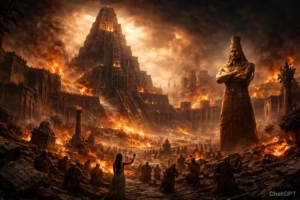
The result was confusion. God confounded their language, scattered the people, and ended their attempt to reach heaven through their own strength. The very name Babylon is rooted in the word “Babel,” which means confusion. Even today, Babylon reminds us that striving for success and independence apart from the Lord leads to division and spiritual emptiness.
Babylon in the Time of Israel
Centuries later, Babylon became one of the greatest empires in the ancient world and a tool in God’s hand to bring judgment upon His people. The book of 2 Kings describes how the Babylonians conquered Jerusalem, destroyed the temple, and carried many Israelites into captivity.
Jeremiah 29:10 declares, “For thus saith the Lord, That after seventy years be accomplished at Babylon I will visit you, and perform my good word toward you, in causing you to return to this place.” Though Babylon represented judgment, it also became a place of refinement and restoration for the people of God. Even in exile, God did not forget His covenant.
This season of captivity taught Israel many lessons. It reminded them that God alone is sovereign over nations and history. It also showed that even in foreign lands and difficult circumstances, believers are called to remain faithful and prayerful. Jeremiah 29:7 encourages the people: “And seek the peace of the city whither I have caused you to be carried away captives, and pray unto the Lord for it.”
Prophecies of Babylon’s Fall
Throughout prophetic writings, Babylon stands as a warning to the proud and the powerful. The prophets Isaiah and Jeremiah both speak about Babylon’s eventual destruction. Isaiah 13:19 says, “And Babylon, the glory of kingdoms, the beauty of the Chaldees' excellency, shall be as when God overthrew Sodom and Gomorrah.” No matter how great Babylon seemed, it could not escape the judgment of God.
Jeremiah 51:7 gives even deeper insight: “Babylon hath been a golden cup in the Lord’s hand, that made all the earth drunken: the nations have drunken of her wine, therefore the nations are mad.” This imagery shows that Babylon’s influence extended far beyond her own borders. She led many into corruption and idolatry. For believers today, this verse reminds us to guard against worldly influences that can intoxicate the heart and dull spiritual discernment.
Despite her pride, Babylon’s end was certain. Daniel 5 describes the dramatic fall of Babylon during the reign of Belshazzar. While the king feasted and praised idols, a mysterious hand wrote words of judgment on the wall. That night, Babylon fell to the Medes and Persians. It is a timeless warning that no empire, nation, or individual can defy God and stand.
The Symbolic Babylon in Revelation
The book of Revelation presents Babylon as a symbol of the corrupt world system that opposes God and persecutes His people. Revelation 17:5 describes her as “Mystery, Babylon the Great, the Mother of Harlots and Abominations of the Earth.” This imagery connects the ancient empire with a future global system built on greed, immorality, and idolatry.
Revelation 18 provides a vivid vision of Babylon’s downfall. Verse 2 says, “Babylon the great is fallen, is fallen, and is become the habitation of devils.” The chapter goes on to list her wealth, luxury, and moral decay. Yet in a single hour, her power collapses. This is a sobering picture of how fleeting worldly glory really is.
For Christians living in the present age, Revelation’s message is clear. We are called to come out of Babylon spiritually. Revelation 18:4 says, “Come out of her, my people, that ye be not partakers of her sins.” This does not merely refer to leaving a physical place but to separating our hearts from the values of a fallen world. We are called to walk in holiness, truth, and obedience until the Lord returns.
Living Faithfully in a Modern Babylon
Just as the believers of old were called to remain faithful in Babylon, Christians today live in a world that often reflects those same characteristics. Pride, materialism, and moral confusion surround us. Yet God’s people are called to be different.
We live in Babylon, but Babylon must not live in us. This means maintaining purity in our thoughts, resisting the pull of cultural compromise, and holding fast to our identity in Christ. The apostle Paul reminds us in Philippians 3:20, “For our conversation is in heaven.” Our true citizenship is with God, not with the systems of this world.
Believers can remain steadfast through prayer, study of Scripture, and fellowship with other Christians. We are strengthened when we remember that although Babylon may appear powerful for a time, God’s kingdom will triumph. His truth will stand forever.
Key Lessons
- Babylon represents humanity’s pride and rebellion against God.
- God uses even worldly systems for His purposes but ultimately brings judgment on sin.
- The fall of Babylon reminds believers that no earthly power can stand against the Lord.
- Christians today are called to remain faithful, pure, and separate from worldly corruption.
- Our hope is not in earthly kingdoms but in the eternal kingdom of God.
Conclusion
The story of Babylon runs like a thread through the entire Bible, from the Tower of Babel to the book of Revelation. It teaches us about pride, judgment, and the unwavering sovereignty of God. For believers today, Babylon is more than a historical city; it is a living reminder to remain humble, obedient, and faithful in a world that often glorifies self and sin.
No matter how powerful worldly kingdoms appear, they will all pass away. But the kingdom of God endures forever. Let us choose to live as citizens of that heavenly realm, resisting the temptations of modern Babylon and standing firm in the truth of Christ.
Further Reading
BIBLE VERSES ABOUT BLACK PEOPLE
BIBLE VERSES ABOUT LATENESS TO CHURCH
BIBLE VERSES ABOUT GOD PROTECTING US FROM OUR ENEMIES