Bible Verse: "It Takes a Village to Raise a Child" – Exploring This Life-Changing Principle
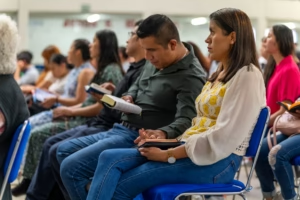
When we think of raising children, images of sleepless nights, parental worries, and personal transformations often come to mind. But there’s a profound saying that resonates deeply with parents, educators, and caregivers alike: “It takes a village to raise a child.” Interestingly, while many associate this adage with biblical teachings, it's not directly quoted from the Bible. However, the essence of this principle is certainly biblical, echoing collective responsibility and community support. Let’s delve into how this notion aligns with biblical teachings and explore how it continues to shape modern parenting and community life.
understanding-the-concept-a-collective-approach">Understanding the Concept: A Collective Approach
The Origin of the Proverb
The saying "It takes a village to raise a child" is widely associated with African cultures, emphasizing the importance of community in child-rearing. Though it's not a direct quote from Scripture, the Bible is replete with verses underscoring the value of community, shared responsibility, and collective wisdom.
Related Posts:



Biblical Foundations
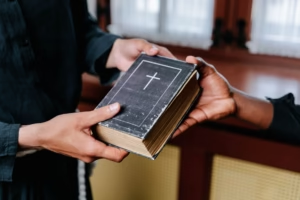
Numerous biblical passages highlight the significance of community and collective effort:
Proverbs 22:6: "Train up a child in the way he should go; even when he is old, he will not depart from it." This verse reflects the importance of instilling values, a task often supported by a community.
Ecclesiastes 4:9-10: "Two are better than one, because they have a good reward for their toil. For if they fall, one will lift up his fellow." Supporting one another is especially crucial in guiding the next generation.
Deuteronomy 6:6-7: Encourages communities to teach diligently, embedding wisdom in daily interactions.
The Role of Community in Child Development
Emotional and Social Growth
Children benefit immensely from the diverse interactions provided by a community. Each member contributes unique perspectives and experiences that enrich a child’s social fabric.
Role Models: Having multiple role models provides a range of behaviors and philosophies for children to observe and emulate.
Support Systems: Community members can become auxiliary support for children, offering guidance and stability in the absence or reinforcement of parental involvement.
Safety and Stability
Communities offer a broader safety net, creating environments where children can learn, play, and grow safely. This extended support network is akin to the protection and security mentioned throughout biblical teachings.
Shared Responsibility: When all members feel a part of the nurturing process, children experience holistic growth under the watchful eyes of many caregivers.
Resources and Opportunities: Access to varied resources, including education and social programs, is more readily available in a community-focused environment.
Modern Applications: Embracing the Village Approach
Building Community Connections
In our fast-paced, digitally-connected world, finding a village might seem challenging. Yet, there are ways to foster such environments even today:
Local Engagement: Participate in neighborhood groups, church events, and school activities to build a supportive network.
Digital Communities: Use technology to connect and share parenting resources and support, joining forums and social media groups dedicated to child-rearing.
Career and Family Balance
Juggling professional responsibilities and child-rearing is strenuous. Communities can provide essential slack, allowing for necessary work-life balance.
Shared Responsibilities: Childcare swaps or community babysitting co-ops are practical implementations of the village concept.
Mentorship Programs: Encouraging mentorship between older and younger generations can foster mutual growth and understanding.
Conclusion: The Enduring Value of a Village
While not a direct biblical quote, the idea that "it takes a village to raise a child" is deeply rooted in the community-oriented values espoused throughout the Bible. This wisdom underscores the interconnectedness that enriches childhood experiences and reinforces stability and safety. By embracing the village ethos, communities can provide critical support and varied opportunities that individual families alone may struggle to offer. In doing so, they prepare children not only to survive but to thrive, ensuring a resilient and vibrant future for all.
As we consider the influences shaping our children's lives, let us remember the age-old wisdom that rings true—each member of the village holds a piece of the future, and together, we are stronger.