
Understanding the Importance of Burial in the Bible
In moments of loss or mourning, we often seek understanding and comfort in God's Word. Burial, a practice steeped in tradition and cultural significance, holds a particular place in Scripture. For Christians, understanding biblical perspectives on burial can offer reassurance, practical guidance, and spiritual insight into how faith intersects with life and death.
Burial in the Old Testament: Honoring the Deceased
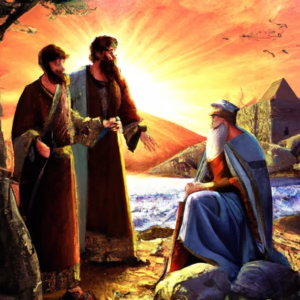
The Old Testament is replete with examples that emphasize the importance of burial as an expression of respect and care for the deceased. In Genesis, we see Abraham buries his wife Sarah in the cave of Machpelah (Genesis 23:19), a poignant moment illustrating love and honor. This burial site becomes the family tomb, showing a continuity of care and respect for lineage.
Another significant moment occurs in Deuteronomy 34:5-6, where Moses is buried by God Himself in an undisclosed location. Moses’ burial highlights God’s personal care and respect for His faithful servant. These instances underscore that burial was considered an important rite of passage, a sacred act of closure and honor.
New Testament Insights: Burial and Resurrection
Moving into the New Testament, the theme of burial becomes even more profound, particularly with the burial and resurrection of Jesus Christ. Each of the Gospels tells us about Joseph of Arimathea, who took great care to provide Jesus with a proper burial in his own tomb (Mark 15:43-46). This act of devotion reflects the respect and love meant to be shown to those who have departed.
Related Posts:

The burial of Christ is not an end but a precursor to resurrection, emphasizing victory over death. As Paul states in 1 Corinthians 15:3-4, “Christ died for our sins according to the Scriptures, that he was buried, that he was raised on the third day…” Burial, in this context, becomes a symbol of hope, aligning with the promise of eternal life through Jesus.
Principles Rooted in Scripture: The Practice of Burial
The Bible's teachings about burial suggest several principles for us today:
Honor and Respect: Burial signifies respect and care for the physical body. As humans made in God’s image, the body deserves honor even after death, reflecting the respect due to our earthly existence (Genesis 1:27).
Hope and Faith: For Christians, burial is not just an act of interment but also a testament to faith in the future resurrection and eternal life, as promised through Jesus Christ (John 11:25-26).
Community and Comfort: Burials serve as communal acts where family and friends come together to mourn, remember, and support one another, embodying the biblical call to "mourn with those who mourn" (Romans 12:15).
Practical Application: Reflecting on Burial Practices Today
In modern times, while cultural and personal preferences may vary, believers can apply biblical insights on burial to their practical lives:
- Assess burial choices through the lens of honoring the person and reflecting values consistent with faith.
- Utilize burial ceremonies as opportunities to share the gospel's hope with others, emphasizing the resurrection and eternal life.
- Ensure burial practices align with personal convictions and family traditions while offering flexibility to respect different faith expressions.
Biblical Perspective on Cremation
While burial is predominantly represented in Scripture, Christians may wonder about the biblical view on cremation. The Bible doesn’t explicitly address cremation, allowing it to remain a matter of personal conviction. The focus should remain on the spiritual implications of how we honor God and love others irrespective of the method chosen.
Conclusion: Embracing the Hope Beyond the Grave
Understanding burial from a biblical perspective offers deep insights into God’s care for us, both in life and in death. As Christians, we can find comfort in the narratives of Scripture that honor the body, promote community and foster hope. Whether we are making decisions about our own preparations or those of a loved one, let us be reminded of the profound truth: in Christ, death is not the final word. Embrace the assurances of resurrection and eternal life, secure in the love and promises of our faithful God.