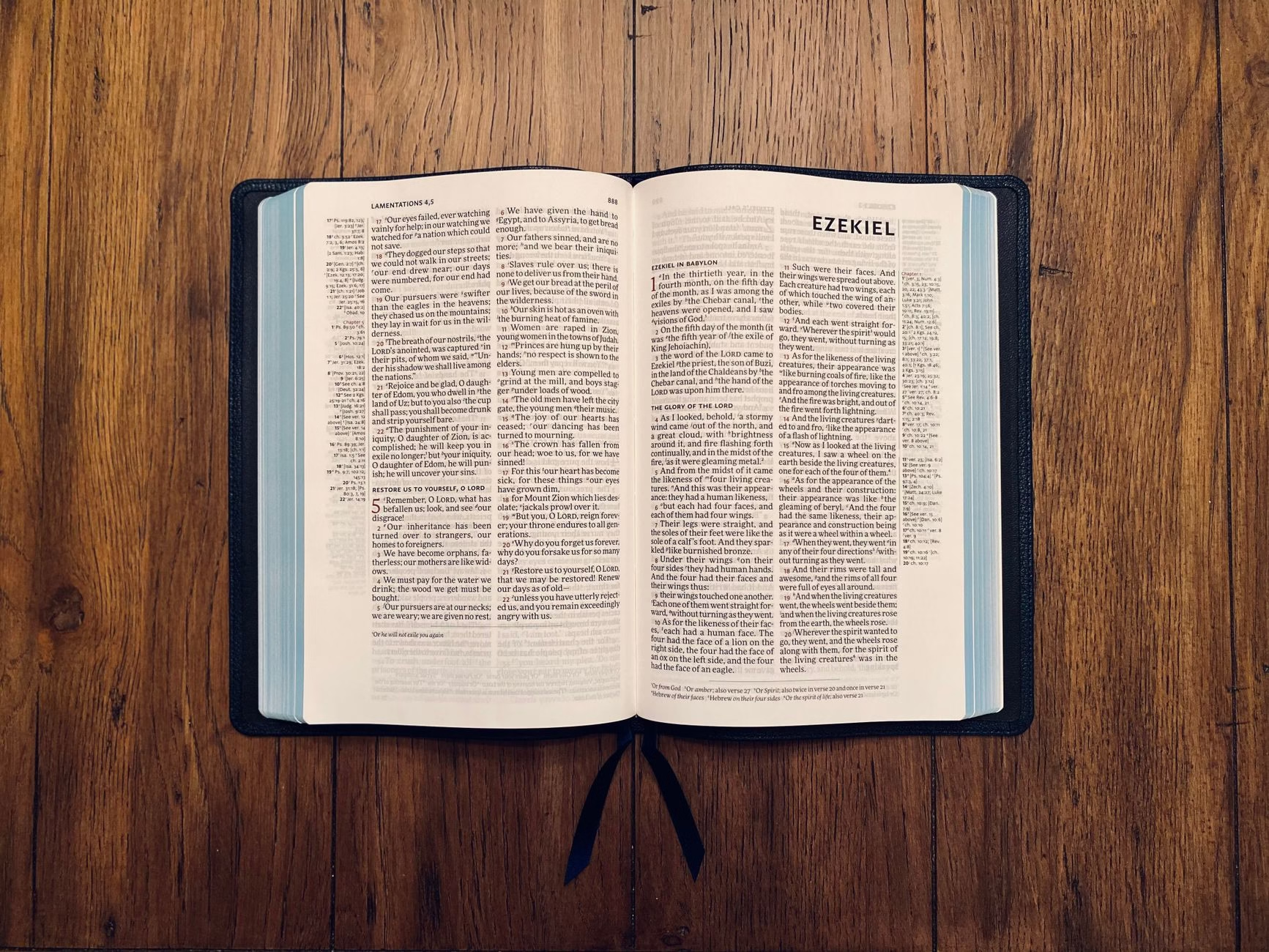
The prophet Ezekiel wrote from one of the darkest chapters in Israel’s history. Transported to Babylon during the first waves of captivity, he sat among a broken people beside the River Chebar. Jerusalem was falling, the temple was in ruins, and the covenant promises seemed utterly shattered. To an exiled community, it felt as though God had either abandoned them or been defeated by the gods of Babylon.
Yet it was precisely in this land of exile that the heavens opened. The book of Ezekiel is filled with strange visions, fiery imagery, and profound prophetic actions, but its underlying message is deeply comforting. Through Ezekiel, God demonstrated that His presence is not limited to a geographical temple, His holiness remains uncompromised, and His mercy is powerful enough to raise the dead. Exploring the primary themes of Ezekiel reveals timeless truths about God’s heart for restoration and renewal.
The God Who Meets Us in Exile
When Ezekiel received his call to prophesy, he was not standing in the sacred precincts of Jerusalem. He was a refugee in a pagan land. The book opens with a staggering vision of God’s throne chariot—a magnificent, wheeled structure moving with terrifying swiftness across the sky. The message was clear: God is not tied to a single city or building. He reigns over every square inch of creation, and He willingly enters the places of our captivity.
At the end of this overwhelming revelation of divine majesty, Ezekiel describes the radiant presence of the Lord:
Related Posts:

“Like the appearance of a rainbow in a cloud on a rainy day, so was the appearance of the brightness all around it. This was the appearance of the likeness of the glory of the Lord.” – Ezekiel 1:28
Notice the symbol God chose to display His glory in Babylon: a rainbow. Just as the rainbow appeared to Noah after the flood as a token of covenant mercy, God showed Himself to Ezekiel as a reminder that judgment would not have the final word. When life feels shattered and our spiritual surroundings seem barren, God remains sovereign, glorious, and present with His people.
A Heart That Desires Life, Not Destruction
Much of Ezekiel’s early ministry involved delivering sober warnings of judgment. Israel had compromised her calling, embraced idolatry, and oppressed the vulnerable. Yet, God made it clear through the prophet that divine judgment is never driven by malice or vindictiveness. God takes no delight in human ruin.
Ezekiel served as a spiritual watchman, called to sound the trumpet so that people might turn back to God. The Lord revealed the true motivation behind His calls to repentance in clear, tender terms:
“Say to them: ‘As I live,’ says the Lord God, ‘I have no pleasure in the death of the wicked, but that the wicked turn from his way and live. Turn, turn from your evil ways! For why should you die, O house of Israel?'” – Ezekiel 33:11
This verse cuts through the common misconception that the Old Testament God is merely wrathful. God’s grief over human sin stems from His intense love for human life. He warns us of the consequences of sin because sin destroys us. His constant appeal throughout scripture—and through our own moments of conviction—is always an invitation to turn around and find life in Him.
The True Shepherd Who Restores the Broken
In Ezekiel 34, the prophet delivers a biting rebuke against the spiritual and political leaders of Israel. Instead of feeding the flock, these shepherds had fed themselves. They ignored the weak, neglected the sick, and left the vulnerable exposed to predators. But God did not leave His people without hope. He declared that He Himself would step into the role of the true Shepherd.
“For thus says the Lord God: ‘Indeed I Myself will search for My sheep and seek them out. As a shepherd seeks out his flock on the day he is among his scattered sheep, so I will seek out My sheep and deliver them from all the places where they were scattered on a cloudy and dark day.'” – Ezekiel 34:11-12
This remarkable promise finds its ultimate fulfillment in Jesus Christ, who explicitly identified Himself as the Good Shepherd who lays down His life for the sheep. God promised not only to gather His people, but to provide intimate, restorative care for every broken soul:
“‘I will seek what was lost and bring back what was driven away, bind up the broken and strengthen what was sick.'” – Ezekiel 34:16
If you feel bruised by the world or let down by human leadership, Ezekiel points to a Savior who knows your name, seeks you out in the dark, and gently binds up your spiritual wounds.
Transformation from the Inside Out
Israel’s history had proved that external rules and cultural heritage could not keep human hearts faithful to God. A superficial commitment always crumbles under pressure. God revealed to Ezekiel that true renewal requires a profound, internal transformation—a divine heart transplant.
In one of the most famous New Covenant passages in all of scripture, God promises to do for His people what they could never do for themselves:
“I will give you a new heart and put a new spirit within you; I will take the heart of stone out of your flesh and give you a heart of flesh. I will put My Spirit within you and cause you to walk in My statutes, and you will keep My judgments and do them.” – Ezekiel 36:26-27
Real spiritual life is not a matter of trying harder to force a cold, stubborn heart into obedience. It begins when God removes the hardened, unresponsive elements of our character and replaces them with a soft, receptive heart responsive to His love. By indwelling us with His Holy Spirit, He provides both the desire and the power to live in a way that honors Him.
Life for the Dry Bones
Perhaps no image in the Old Testament captures the power of spiritual revival like Ezekiel’s vision of the Valley of Dry Bones in chapter 37. God brought Ezekiel to a valley filled with scattered, sun-bleached human bones—a picture of absolute death, defeat, and hopelessness. Humanly speaking, restoration was impossible.
When God asked the prophet if these dry bones could live, Ezekiel wisely answered, “O Lord God, You know.” God then commanded Ezekiel to speak His word to the dead bones:
“Again He said to me, ‘Prophesy to these bones, and say to them, “O dry bones, hear the word of the Lord!” Thus says the Lord God to these bones: “Surely I will cause breath to enter into you, and you shall live.”‘” – Ezekiel 37:4-5
As Ezekiel spoke, a rattling sound echoed through the valley. Bones came together, flesh appeared, and when the breath of God entered them, an exceedingly great army stood upon their feet. God explained that these bones represented the house of Israel, who were saying, “Our bones are dry, our hope is lost.”
This vision remains a vital testimony for believers today. No circumstance is too dead for the breath of God. No church, family, heart, or community is beyond the reach of His resurrecting power. What human effort views as completely decayed, the Spirit of God can transform into a living testimony of His grace.
The Promise of His Abiding Presence
The final chapters of Ezekiel describe a detailed vision of a new temple and a restored land. While scholars hold various views on the literal details of this temple, the entire book culminates in a single, magnificent phrase. The very last verse of the book gives the name of the restored city:
“…and the name of the city from that day shall be: THE LORD IS THERE.” – Ezekiel 48:35
In Hebrew, this name is Yahweh Shammah—”The Lord is There.” This is the grand arc of the entire biblical narrative. God’s ultimate goal in redemption is not simply to correct our behavior or improve our circumstances; it is to dwell with His people forever. Through every trial, exile, and valley of dry bones, the overarching promise of scripture stands firm: in Christ, God is with us, and He will never leave us nor forsake us.