
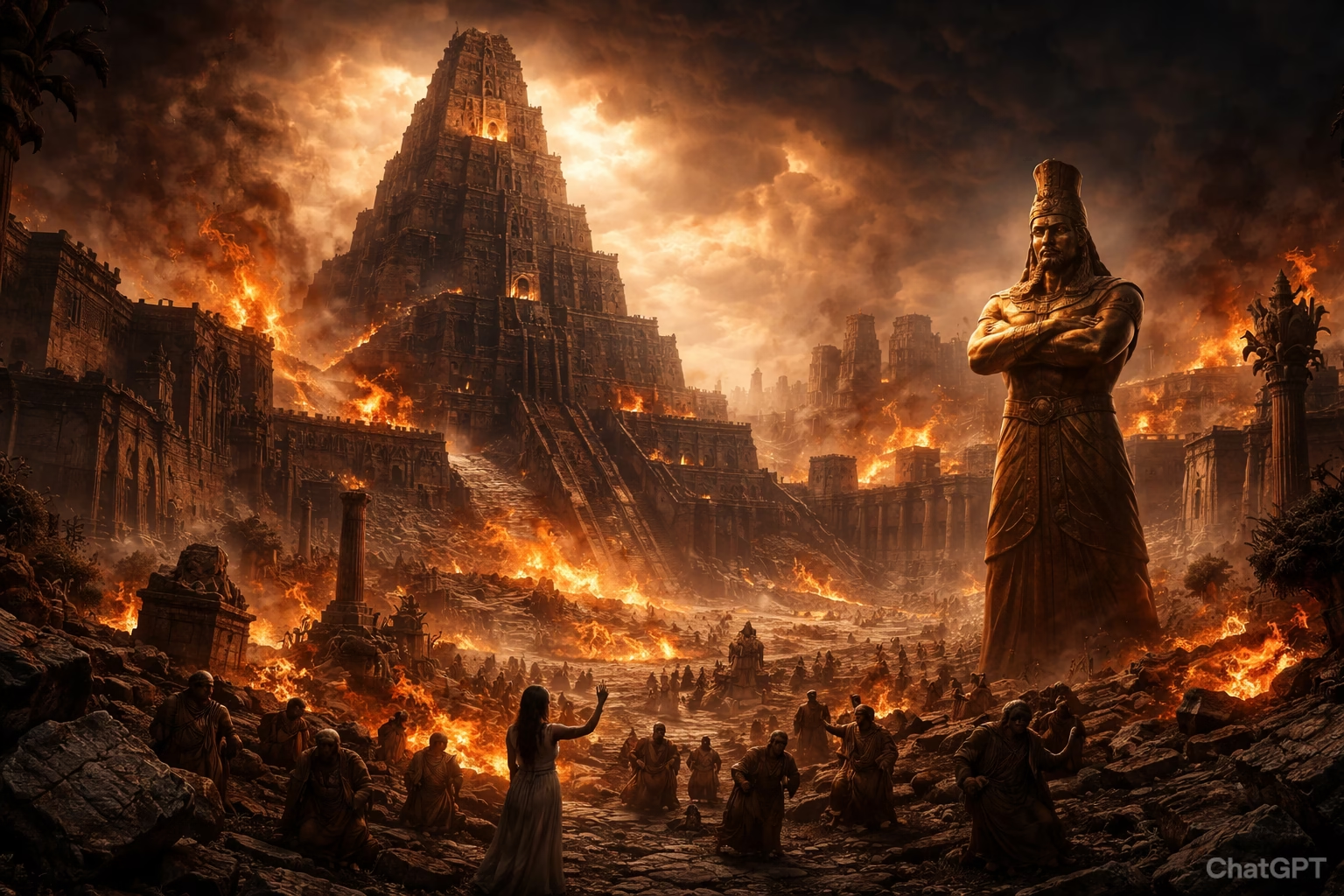
Babylon: The Rise, Glory, and Legacy of One of History’s Greatest Civilizations
Few names from the ancient world spark imagination quite like Babylon. Synonymous with grandeur, innovation, and mystery, Babylon was more than just a legendary city—it was a powerhouse of culture, science, politics, and architecture that shaped human civilization. From the Code of Hammurabi to the Hanging Gardens, Babylon’s influence continues to echo thousands of years later.
In this article, we’ll explore what made Babylon extraordinary, how it rose to power, what defined its society, and why its legacy still matters today.
Where Was Babylon and Why Was It Important?
Babylon was located in ancient Mesopotamia, along the Euphrates River, in what is modern-day Iraq. Its strategic position made it a thriving center for:
- Trade between East and West
- Political power in the ancient Near East
- Cultural and scientific advancement
Thanks to fertile land and access to important trade routes, Babylon grew from a modest settlement into one of the most powerful cities of the ancient world.
The Rise of Babylon: From City to Empire
Babylon’s ascent began around 1800 BCE, reaching its peak under the rule of King Hammurabi.
Key Factors Behind Babylon’s Rise
- Strong leadership – Hammurabi unified much of Mesopotamia
- Military power – Strategic conquests expanded its influence
- Economic stability – Agriculture and trade supported growth
Under Hammurabi, Babylon transitioned from a regional city into the capital of a vast empire.
The Code of Hammurabi: Law and Order in the Ancient World
One of Babylon’s most enduring contributions is the Code of Hammurabi, one of the earliest written legal systems in history.
Why the Code of Hammurabi Matters
- Established clear laws and punishments
- Introduced the concept of justice based on evidence
- Influenced future legal systems across civilizations
Often summarized by the phrase “an eye for an eye,” the code reflected Babylon’s belief in order, accountability, and social structure.
Culture, Science, and Daily Life in Babylon
Babylon was not just powerful—it was brilliant.
Achievements That Set Babylon Apart
- Astronomy: Babylonians tracked planets and developed early calendars
- Mathematics: Used a base-60 system (still seen in time and angles today)
- Writing: Cuneiform script preserved history, trade records, and literature
Daily life included bustling markets, religious ceremonies, and complex social hierarchies, all centered around temples and palaces.
The Hanging Gardens: Myth or Marvel?
Perhaps the most famous symbol of Babylon is the Hanging Gardens, often listed as one of the Seven Wonders of the Ancient World.
While historians debate whether they truly existed, descriptions portray:
- Lush, tiered gardens in an arid environment
- Advanced irrigation systems
- A symbol of wealth and engineering genius
Whether real or legendary, the Hanging Gardens represent Babylon’s reputation for luxury and innovation.
The Fall of Babylon and Its Enduring Legacy
Babylon eventually fell to the Persian Empire in 539 BCE, but its influence did not disappear.
Babylon’s Lasting Impact
- Foundations of modern law
- Advances in science and astronomy
- Inspiration for religious texts, literature, and popular culture
Today, Babylon is remembered not just as a city, but as a symbol of human ambition, creativity, and complexity.
Conclusion: Why Babylon Still Captivates Us
Babylon’s story is one of rise, brilliance, and transformation. It reminds us how ancient civilizations laid the groundwork for modern society—through law, science, architecture, and culture. Even in ruins, Babylon continues to capture our imagination, standing as a testament to humanity’s enduring drive to build, organize, and understand the world.
If history teaches us anything, it’s this: Babylon may have fallen, but its legacy is timeless.
