Bible Verses About Refugees: New Testament Insights
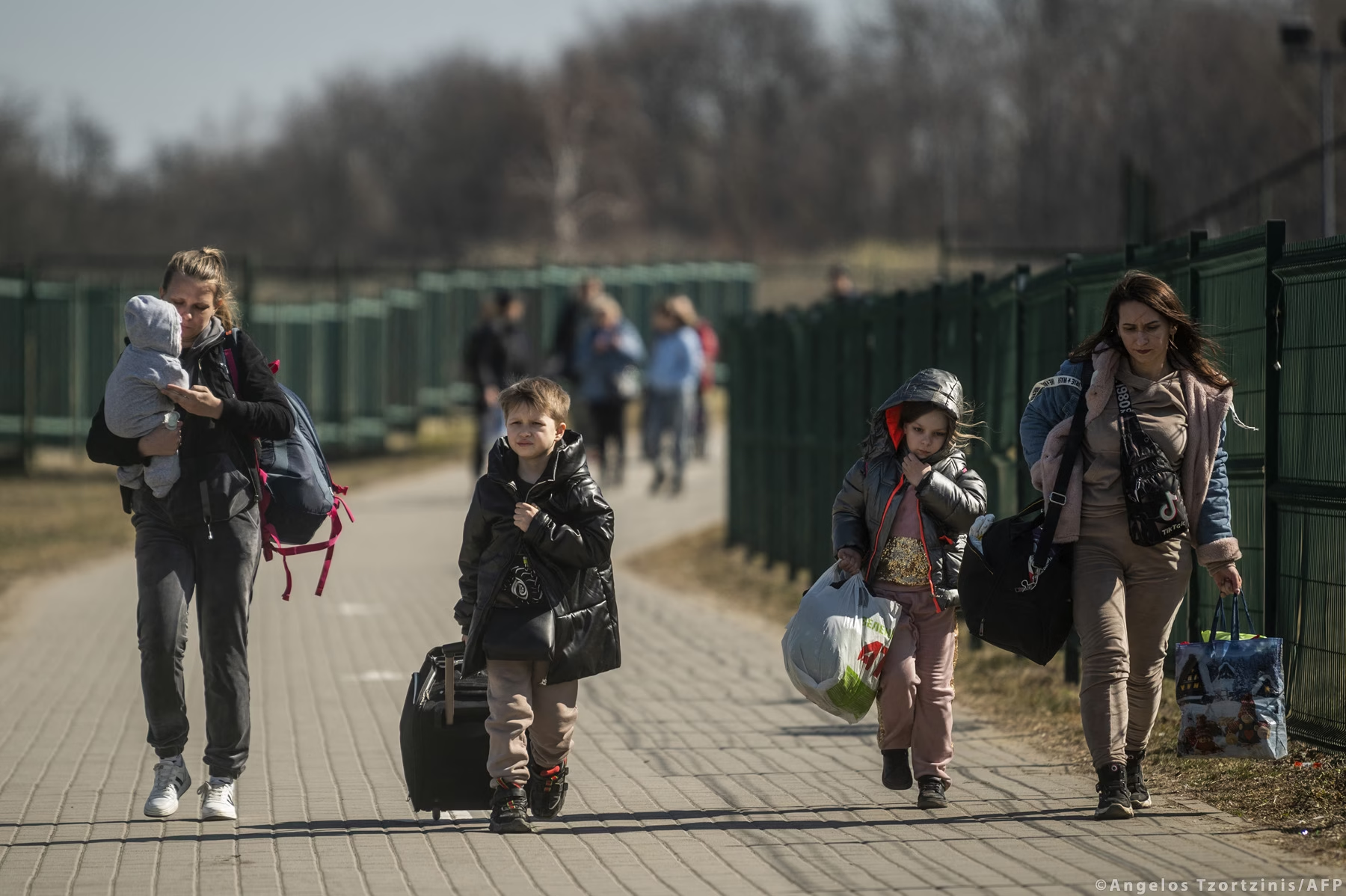
In a world shaped by migration, forced displacement, and refugee crises, the need for compassion and understanding is more vital than ever. The New Testament offers profound insights and guidance on how to approach the issue of refugees, reminding us of our shared humanity. This blog delves into the teachings of Jesus Christ and the apostles, revealing how these passages can inspire us to act with kindness, hospitality, and justice toward those seeking refuge.
The Call to Love and Accept
Jesus’ Teachings on Love
Throughout the New Testament, Jesus emphasizes the importance of love and compassion, encouraging believers to extend that love to all, especially the marginalized and oppressed. Consider these powerful verses:
- Matthew 25:35-40: “For I was hungry and you gave me something to eat, I was thirsty and you gave me something to drink, I was a stranger and you invited me in.”
This scripture highlights Jesus’ identification with those in need, urging us to see the face of Christ in every refugee.
A Command to Welcome the Stranger
The act of welcoming strangers is not just a suggestion but a command rooted in the heart of Christian doctrine. The New Testament reinforces the notion that our treatment of others reflects our faith.
- Hebrews 13:2: “Do not forget to show hospitality to strangers, for by so doing some people have shown hospitality to angels without knowing it.”
This verse points out the significance of hospitality, suggesting that acts of kindness may have far-reaching spiritual implications.
Examples from the Early Church
Apostolic Actions
Refugees are not a modern concept, and the early church provided a model for how to respond to those seeking refuge. Acts of kindness and inclusion characterized the early Christian communities:
- Acts 8:1-4: After the martyrdom of Stephen, many Christians were scattered throughout Judea and Samaria, where they preached the Gospel. Instead of retreating into fear, they embraced their new circumstances and continued to spread the message.
This example shows resilience and purpose, encouraging believers to support refugees as they adjust to new lives.
The Power of Community
The early church demonstrated the strength of community during times of turmoil. Both the need for support and the act of supporting were critical.
- Acts 2:44-45: “All the believers were together and had everything in common. They sold property and possessions to give to anyone who had need.”
This communal aspect not only addresses physical needs but also emphasizes the importance of emotional and spiritual support during transitional times.
The Message of Hope and Restoration
Finding Refuge in Christ
One of the central themes of the New Testament is that of finding refuge and strength in Christ. Believers are called to mirror this comfort and hope to others, especially those who feel lost:
- Matthew 11:28-30: “Come to me, all you who are weary and burdened, and I will give you rest.”
This invitation extends to everyone, including refugees, emphasizing the need for a compassionate approach.
Paul’s Encouragement
The Apostle Paul frequently wrote about the value of community and the hope found in Christ:
- Romans 15:7: “Accept one another, then, just as Christ accepted you, in order to bring praise to God.”
This verse is a rallying cry for inclusion, urging believers to transcend differences and embrace those who are often seen as outsiders.
Conclusion: Embracing the Refugee Experience
The New Testament is rich with teachings that encourage believers to act with compassion, acceptance, and love towards all, including refugees. As we reflect on these scriptures, it becomes clear that the message is not just historical but also profoundly relevant today.
- Key Takeaways:
- Show love and compassion to all, especially those in need.
- Welcome and provide hospitality to strangers, recognizing their value.
- Embrace community and support others through their struggles.
- Find strength in Christ and extend that hope to those seeking refuge.
As we engage with these timeless principles, may we be inspired to act not only as individuals but as a collective to create a world where all, especially refugees, feel welcome, valued, and loved. By embodying these biblical teachings, we contribute to a more compassionate and just society for everyone.