
scripture">Bible Verses About Leaves: The Beauty and Symbolism in Scripture
Nature has always been a source of inspiration for spiritual reflection, and among its many wonders, leaves hold a special place in the Bible. From the vibrant hues of autumn to the sheltering shade in summer, leaves are not merely botanical structures; they embody deeper meanings of life and renewal. In this blog post, we will explore various Bible verses that mention leaves, delve into their significance in scripture, and reflect on the lessons they impart.
The Significance of Leaves in the Bible
Leaves are frequently used as metaphors in the Bible, representing growth, healing, and divine provision. The imagery of leaves can inspire us to think about the cycles of life, God’s creation, and our own spiritual journeys. Let’s examine some of these powerful verses and their meanings.
1. Leaves as Symbols of Healing
One of the most beautiful aspects of leaves in the Bible is their association with healing and restoration.
- Ezekiel 47:12 states:
“And by the river upon the bank thereof, on this side and that side, shall grow all trees for meat, whose leaf shall not fade, neither shall the fruit thereof be consumed: it shall bring forth new fruit according to his months, because their waters they issued out of the sanctuary: and the fruit thereof shall be for meat, and the leaf thereof for medicine.”


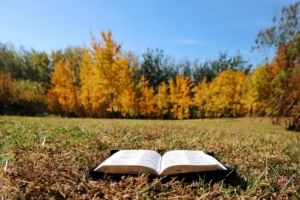
This verse paints a vivid picture of God’s provisions, where leaves play a crucial role in healing. The leaves here symbolize the restorative power of God’s presence and the abundant life offered to believers.
righteousness">2. The Promise of Righteousness
Leaves also signify the blessings that come from living in accordance with God’s will.
- Psalm 1:3 tells us:
“He shall be like a tree planted by the rivers of water, that brings forth his fruit in his season; his leaf also shall not wither; and whatsoever he does shall prosper.”
Here, the leaf serves as proof of a fruitful life—an image of those who walk in righteousness.
3. The Transience of Life
Leaves undergo seasons of change, echoing the transient nature of life itself.
- Isaiah 40:6-8 reminds us:
“The voice said, Cry. And he said, What shall I cry? All flesh is grass, and all the goodliness thereof is as the flower of the field. The grass withers, the flower fades: because the spirit of the Lord blows upon it: surely the people is grass.”
This passage highlights the fleeting nature of life, reminding us that, just as leaves wither, our earthly existence is temporary. It urges us to focus on what endures: the Word of God.
4. The Renewal of Creation
Leaves also represent renewal and the beauty of God’s creation.
- Revelation 22:2 states:
“In the midst of the street of it, and on either side of the river, was there the tree of life, which bore twelve manner of fruits, and yielded her fruit every month: and the leaves of the tree were for the healing of the nations.”
In this verse, the tree of life symbolizes eternal life, and its leaves serve a purpose of universal healing—reflecting God’s ultimate plan for restoration and hope.
Practical Applications of These Verses
The contemplation of these verses offers us an opportunity to reflect on our own lives. Here are a few practical takeaways:
- Embrace Change: Just as leaves transform with the seasons, embrace the changes in your life as part of God’s design.
- Seek Healing: Acknowledge the ways in which God can heal you emotionally, physically, and spiritually—much like the healing properties of leaves.
- Pursue Righteousness: Strive to live a life that bears good fruit, knowing that it will be evident in the “leaves” of your life—your actions and your impact on others.
- Stay Grounded in Faith: In seasons of doubt or dryness, remember the nourishment that flows from God, just as leaves draw strength from their roots.
Conclusion
Leaves are more than just a natural element; they are rich with symbolism and meaning in the Bible. From representing healing and righteousness to serving as a reminder of life's transience, leaves inspire us to see the deeper truths embedded within scripture. As we reflect on these verses, let us be encouraged to cultivate a life full of spiritual growth and renewal, trusting that God is our ultimate provider. In the grand tapestry of God’s creation, may we find our place as vibrant as the leaves in the spring sun—alive, flourishing, and full of purpose.