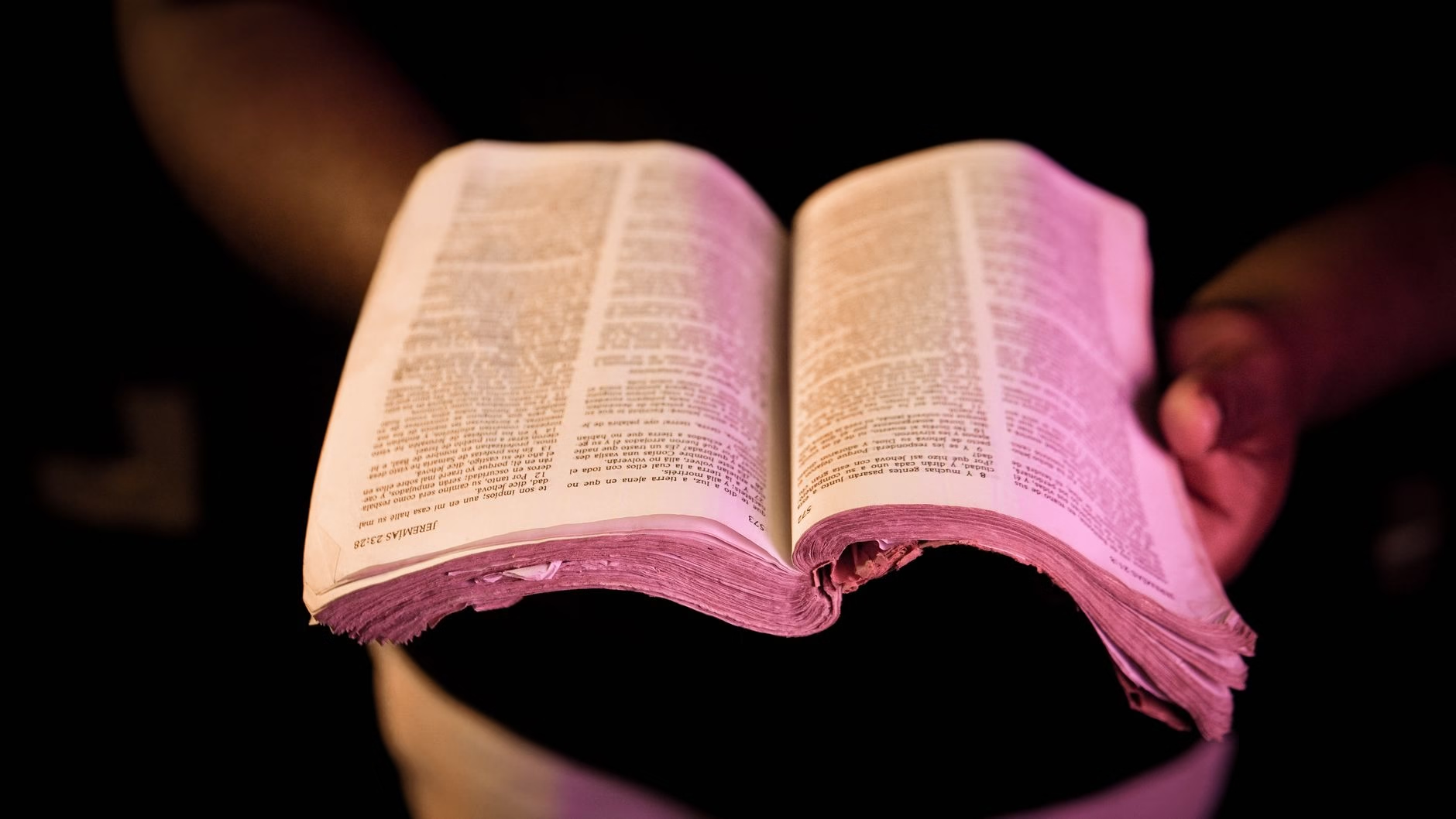
Bible Verses About God Accepting Everyone: Understanding God’s Unconditional Embrace
In a world that’s often plagued with division and exclusion, many seek a sense of acceptance and belonging. One profound source of comfort and reassurance can be found in the Bible, where countless verses depict a God who embraces all individuals, regardless of their background, status, or past. The universal acceptance by God is a common thread that runs through many scriptures, painting a picture of divine love and inclusivity.
Understanding God’s Universal Love
The Essence of Acceptance
At the core of the Christian faith is the belief in a loving God who accepts everyone. This is not a mere modern-day sentiment but a timeless truth reflected throughout biblical texts. God’s love is seen as all-encompassing and inclusive, reaching out to every individual without discrimination.
Key Verse: John 3:16
- “For God so loved the world that he gave his one and only Son, that whoever believes in him shall not perish but have eternal life.”
- This verse is fundamental in Christianity, highlighting God’s unconditional love and acceptance. It assures believers that the invitation to eternal life is extended to everyone, transcending human boundaries and prejudices.
Prominent Bible Verses on Acceptance
Romans 10:12-13
- “For there is no difference between Jew and Gentile—the same Lord is Lord of all and richly blesses all who call on him, for everyone who calls on the name of the Lord will be saved.”
- This passage underscores the removal of socio-religious barriers, emphasizing that God’s grace is available to every person regardless of ethnicity or cultural background.
Galatians 3:28
- “There is neither Jew nor Gentile, neither slave nor free, nor is there male and female, for you are all one in Christ Jesus.”
- This scripture reinforces the unity and equality that believers have in Jesus Christ. It speaks to the breakdown of divisions, advocating for a community centered around faith rather than cultural or social divides.
God’s Embrace Beyond Boundaries
Acts 10:34-35
- “Then Peter began to speak: ‘I now realize how true it is that God does not show favoritism but accepts from every nation the one who fears him and does what is right.'”
- This passage marks a powerful moment in the early Christian church where the universality of God’s acceptance becomes clear. It indicates a pivotal shift from exclusivity to inclusivity in the early days of Christianity.
Revelation 7:9
- “After this I looked, and there was before me a great multitude that no one could count, from every nation, tribe, people and language, standing before the throne and before the Lamb.”
- The vision of a diverse gathering before God’s throne serves as a testament to the global and inclusive nature of salvation. It reassures believers that God’s kingdom welcomes all people, creating a mosaic of unity through faith.
Embracing the Message in Daily Life
Living Out Divine Acceptance
Understanding and embracing the message of God’s universal acceptance compels believers to mirror this love in their own lives. Here are some practical ways to embody this principle:
- Practice Inclusion: Actively seek to include others, appreciating and valuing diverse perspectives and experiences.
- Show Compassion: Follow the example of Jesus by showing kindness and understanding to those who may feel marginalized or excluded.
- Foster Unity: Work towards building communities that celebrate diversity and strive for unity, reflecting the nature of God’s kingdom.
Conclusion
The Bible presents a God who is radically inclusive and accepts everyone. This divine acceptance invites individuals from all walks of life to partake in the richness of faith and community. As believers embrace this truth, they are beckoned to reflect this same acceptance in their relationships and interactions with others.
As you journey through life, remember these profound truths and let them guide you in creating spaces of love, acceptance, and belonging. For in God’s kingdom, every person is cherished, and every soul is welcomed.