
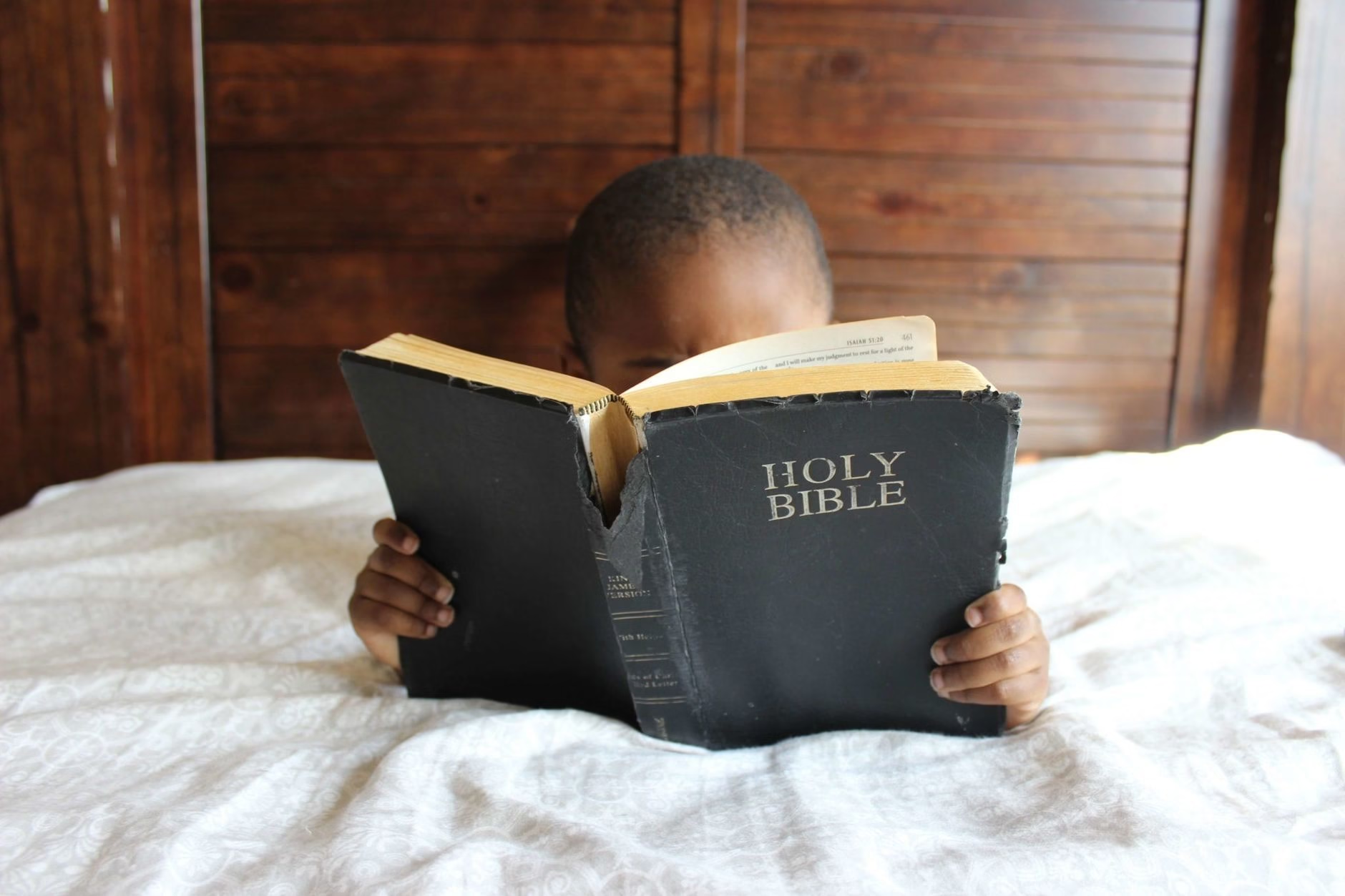
BIBLE VERSES ABOUT HOW CHILDREN SHOULD TREAT THEIR PARENTS
Introduction
The relationship between children and parents is one of the deepest and most influential connections in human life. From birth to adulthood, parents play an essential role in shaping character, guiding choices, and providing love and care. Yet, in today’s fast-paced world, the biblical command to honor and respect parents can often be overlooked or minimized. For Christians, understanding how children should treat their parents is not just about maintaining good family relationships, it is about obedience to God and a reflection of His divine order for the home.
The Bible teaches that honoring parents is fundamental to a life of blessing. It is one of the first commandments that comes with a promise of long life and prosperity. In a society where individualism often takes priority, believers must return to the Word of God to rediscover how families are meant to function according to His design. Let us explore what Scripture says about this vital topic and how these teachings can be applied in our daily lives.
Honoring Parents is a Command from God
The foundation of how children should treat their parents begins in the Ten Commandments.
Related Posts:

Exodus 20:12 says, “Honor your father and your mother so that you may live long in the land the Lord your God is giving you.”
This verse shows that honoring our parents is not a suggestion but a commandment. It reveals that family order and respect are deeply connected to spiritual blessing. The act of honoring involves showing respect, listening with obedience, and caring for parents as they grow older.
To honor means to treat someone with great esteem. It involves both attitude and action. Children who honor their parents reflect reverence for God because they obey His Word. The family becomes a place of peace when children embrace this divine principle.
Obedience Reflects True Honor
The Apostle Paul reinforces this commandment in Ephesians 6:1–3, where it states, “Children, obey your parents in the Lord, for this is right. Honor your father and mother, which is the first commandment with a promise, so that it may go well with you and that you may enjoy long life on the earth.”
Obedience is an expression of honor. When children obey their parents, especially in matters that align with God’s Word, they acknowledge the authority that God placed over them. This obedience teaches humility and submission, qualities that are necessary in every area of Christian life.
For younger children, obedience might mean doing chores without complaining or following guidance with a willing heart. For adult children, obedience takes another form, such as offering respect, seeking counsel, and caring for aging parents with dignity and compassion.
Obedience to parents ultimately reflects a heart that desires to please God.
Showing Respect and Kindness
Respect goes beyond simply doing what parents say. It includes treating them with kindness and speaking with gentleness. The book of Proverbs 23:22 instructs, “Listen to your father who gave you life, and do not despise your mother when she is old.”
This verse reminds believers to cherish their parents and to value their wisdom. Communication should be marked by patience and love rather than harsh words or irritation. The Bible warns against rebellion and mockery toward parents, as seen in Proverbs 30:17, which says that those who mock a father or scorn a mother will face God’s disapproval.
Treating parents with respect is one of the clearest signs of a mature and godly character. Children who cultivate understanding and honor in their speech invite the favor of God upon their households.
Caring for Parents in Their Old Age
In many cultures, caring for elderly parents is viewed as a responsibility of love. The Bible upholds this value as a matter of faithfulness. In 1 Timothy 5:8, the Apostle Paul writes, “Anyone who does not provide for their relatives, and especially for their own household, has denied the faith and is worse than an unbeliever.”
This passage emphasizes that caring for family members, including parents, is a spiritual duty. Adult children should not neglect their parents but should support them with affection, time, and understanding. Jesus Himself rebuked those who used religious excuses to avoid caring for their parents, as recorded in Mark 7:9–13, where He condemned those who claimed their resources were dedicated to God while ignoring the needs of their parents.
Showing compassion and providing for parents is a visible demonstration of faith and love in action.
Learning from Biblical Examples
The Scriptures contain many examples of individuals who treated their parents with great respect or faced consequences for failing to do so.
One example is Joseph, who showed deep love and care for his father Jacob. Even after years of separation, Joseph welcomed his father to Egypt and provided for him generously. His actions reflected wisdom and reverence for family bonds.
In contrast, Absalom, the son of King David, rebelled against his father. His story in 2 Samuel 15 reveals the disastrous outcome of disrespect and pride. His rebellion brought pain and destruction instead of honor and blessing.
These examples teach that honoring parents brings stability and peace, while dishonoring them leads to broken relationships and sorrow.
The Spiritual Rewards of Honoring Parents
The Bible makes it clear that obedience and honor toward parents are accompanied by divine rewards. The promise found in Ephesians 6:2–3 assures that those who show respect will experience well-being and longevity.
This promise is not only about physical life but also about spiritual abundance. Honoring parents builds character, strengthens relationships, and produces a heart of gratitude. Families that value this principle create an environment where the love of Christ thrives.
When children learn to respect authority at home, they are more likely to respect God’s authority in every area of life. Obedience to parents is a training ground for obedience to the Lord.
Key Lessons
- Honoring parents is a divine commandment that brings blessings and longevity.
- Obedience to parents reflects true reverence for God and a humble heart.
- Respect and kindness should guide communication and behavior toward parents.
- Caring for parents, particularly when they are elderly, is a spiritual responsibility.
- Biblical examples show that honoring parents results in peace, while dishonor leads to pain.
- The family is strengthened when children model love, obedience, and gratitude.
Conclusion
Honoring and caring for parents is not just a cultural value, it is a biblical principle rooted in God’s eternal truth. Children who treat their parents with love and respect glorify God and contribute to a strong and peaceful family life. Through humility, obedience, and compassion, we reflect the character of Christ, who Himself honored His earthly parents and His Heavenly Father in all things.
As believers, we are called to uphold the beauty of family relationships according to Scripture. Let us teach these truths to the next generation so that they may walk in blessing and continue the cycle of godly love that honors both parents and God. A home built on respect and biblical truth will always bear the light of Christ.
Further Reading
BIBLE VERSES ABOUT BLACK PEOPLE
BIBLE VERSES ABOUT LATENESS TO CHURCH
BIBLE VERSES ABOUT GOD PROTECTING US FROM OUR ENEMIES


