CATHOLIC BIBLE VERSES ABOUT FORGIVENESS
Introduction
Forgiveness is one of the most transformative acts a Christian can experience. In the Catholic faith, forgiveness is deeply rooted in the very heart of the Gospel, expressed through the life, death, and resurrection of Jesus Christ. Every time we recite the Lord’s Prayer, we are reminded of its central importance when we say, “Forgive us our trespasses, as we forgive those who trespass against us.” To forgive is not merely a moral duty, but a reflection of the divine mercy that God extends to humanity.
In a world often marked by resentment, division, and pain, forgiveness offers freedom. It brings healing to relationships, restores peace to troubled hearts, and reconnects the faithful with the love of God. The Scriptures are filled with powerful examples and teachings about forgiveness that guide Catholics to live as ambassadors of reconciliation and grace.
This article explores inspiring Catholic Bible verses about forgiveness, their deeper meanings, and practical ways to embrace this divine gift in everyday life.
Related Posts:

scripture">The Nature of Forgiveness in Scripture
Forgiveness, according to Scripture, is both an act of mercy and a response to God’s endless compassion. It is not a mere feeling but a conscious decision to release the burden of anger and allow God’s peace to restore what was broken.
In Colossians 3:13, Saint Paul writes, “Bear with one another and, if one has a complaint against another, forgive each other; as the Lord has forgiven you, so you also must forgive.” This verse reminds believers that divine forgiveness comes first, and our calling is to mirror that mercy in our dealings with others. It echoes the truth that holding onto grudges closes the heart to grace, while forgiveness opens it to divine love.
Practically speaking, forgiveness means choosing compassion over revenge. It means seeking reconciliation even when the world encourages retaliation. By forgiving, we imitate the love of Christ who forgave those who crucified Him, saying, “Father, forgive them, for they know not what they do” (Luke 23:34).
God’s Mercy as the Foundation of Forgiveness
The ultimate model of forgiveness is found in God Himself. Throughout the Old and New Testaments, His mercy is announced as boundless and everlasting. Psalm 103:10-12 beautifully declares, “He does not deal with us according to our sins, nor repay us according to our iniquities. As far as the east is from the west, so far does He remove our transgressions from us.”
This passage shows that God’s forgiveness goes beyond human understanding. He completely wipes away sin, restoring a pure relationship with His children. In Catholic teaching, this mercy is experienced in a profound way through the Sacrament of Reconciliation, where the priest, acting in the person of Christ, pronounces absolution and God’s grace is poured out to heal the penitent soul.
When believers understand how greatly they have been forgiven, they find strength to forgive others. Mercy received becomes mercy given. Forgiveness is not weakness, but divine strength that reflects the very heart of the Creator.
The Command to Forgive Others
Forgiveness is not an optional virtue. Jesus clearly teaches that it is necessary for all who wish to live in communion with God. In Matthew 6:14-15, He says, “For if you forgive others their trespasses, your heavenly Father will also forgive you, but if you do not forgive others, neither will your Father forgive your trespasses.”
This command reveals a spiritual law: forgiveness received must lead to forgiveness given. God’s grace is not meant to stop with us but to flow through us. Harboring bitterness blocks this flow, while forgiving others restores harmony with God.
In practical life, forgiving others may mean releasing emotional pain, praying for those who wronged us, or choosing to bless rather than curse. It might not erase the memory of the offense, but it transforms the heart to respond with grace rather than hate. This spiritual discipline keeps believers anchored in humility and love.
Forgiveness as a Path to Healing and Freedom
Carrying resentment is like carrying a heavy weight that drains peace and joy. The act of forgiving sets both the offender and the offended free. It restores emotional balance and opens the door for God’s love to bring comfort and renewal.
In Ephesians 4:31-32, we read, “Let all bitterness and wrath and anger and clamor and slander be put away from you, along with all malice. Be kind to one another, tenderhearted, forgiving one another, as God in Christ forgave you.”
Forgiveness has a healing power that transforms pain into peace. When we allow the Holy Spirit to soften our hearts, anger and bitterness lose their control. We become witnesses of God’s transforming grace. For Catholics, this freeing experience is deepened in prayer and the practice of regular confession, which cleanses the soul and strengthens the will to love.
The Example of Jesus on the Cross
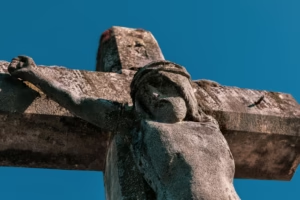
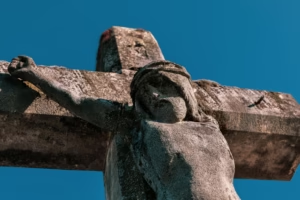
The greatest act of forgiveness ever recorded took place on Calvary. Jesus, suffering unjustly, looked upon those who mocked Him and prayed for their pardon. His words in Luke 23:34 embody the core of the Gospel. They demonstrate that forgiveness is not dependent on the other’s repentance, but on the mercy of a heart filled with divine love.
For Catholics, the Cross is not only the symbol of salvation but also the perfect school of forgiveness. The Eucharist itself reminds believers of this truth. Each Mass re-presents the sacrifice of Christ, whose blood was shed “for the forgiveness of sins.” Through the Eucharist, we receive the grace to forgive others and to live as instruments of reconciliation in our homes, workplaces, and communities.
Key Lessons
• God’s mercy is the foundation of all forgiveness. Without experiencing His grace, human forgiveness becomes nearly impossible.
• Forgiving others is essential for receiving God’s forgiveness. It reflects obedience to Christ’s teaching.
• Forgiveness is a choice that brings peace, healing, and freedom to the soul.
• True forgiveness imitates Jesus, who forgave even while suffering on the Cross.
• The Sacrament of Reconciliation offers a powerful opportunity to experience and extend forgiveness.
Conclusion
Forgiveness lies at the very center of Christian faith. For Catholics, it is both a divine gift and a daily practice that calls for humility, prayer, and reliance on God’s grace. Each act of forgiveness becomes a way of sharing the love of Christ within a broken world. It transforms hearts and restores relationships.
When we forgive, we participate in the very mission of Jesus, who came to bring mercy to sinners and peace to the world. Holding grudges keeps chains around the heart. Letting go through forgiveness sets us free to live as children of God, radiant with compassion and love.
As you reflect on these Catholic Bible verses about forgiveness, take time to ask the Holy Spirit to reveal any areas in your life where grace and mercy are needed. Choose to forgive, because in forgiveness we find the true freedom of the Gospel.
Further Reading
BIBLE VERSES ABOUT BLACK PEOPLE
BIBLE VERSES ABOUT LATENESS TO CHURCH
BIBLE VERSES ABOUT GOD PROTECTING US FROM OUR ENEMIES
PRAYERS FOR JOY AND LAUGHTER
PRAYER FOR THE JOY OF COMPANIONSHIP
PRAYER FOR JOY OF THE LORD
10 Inspiring Prayers for Joy