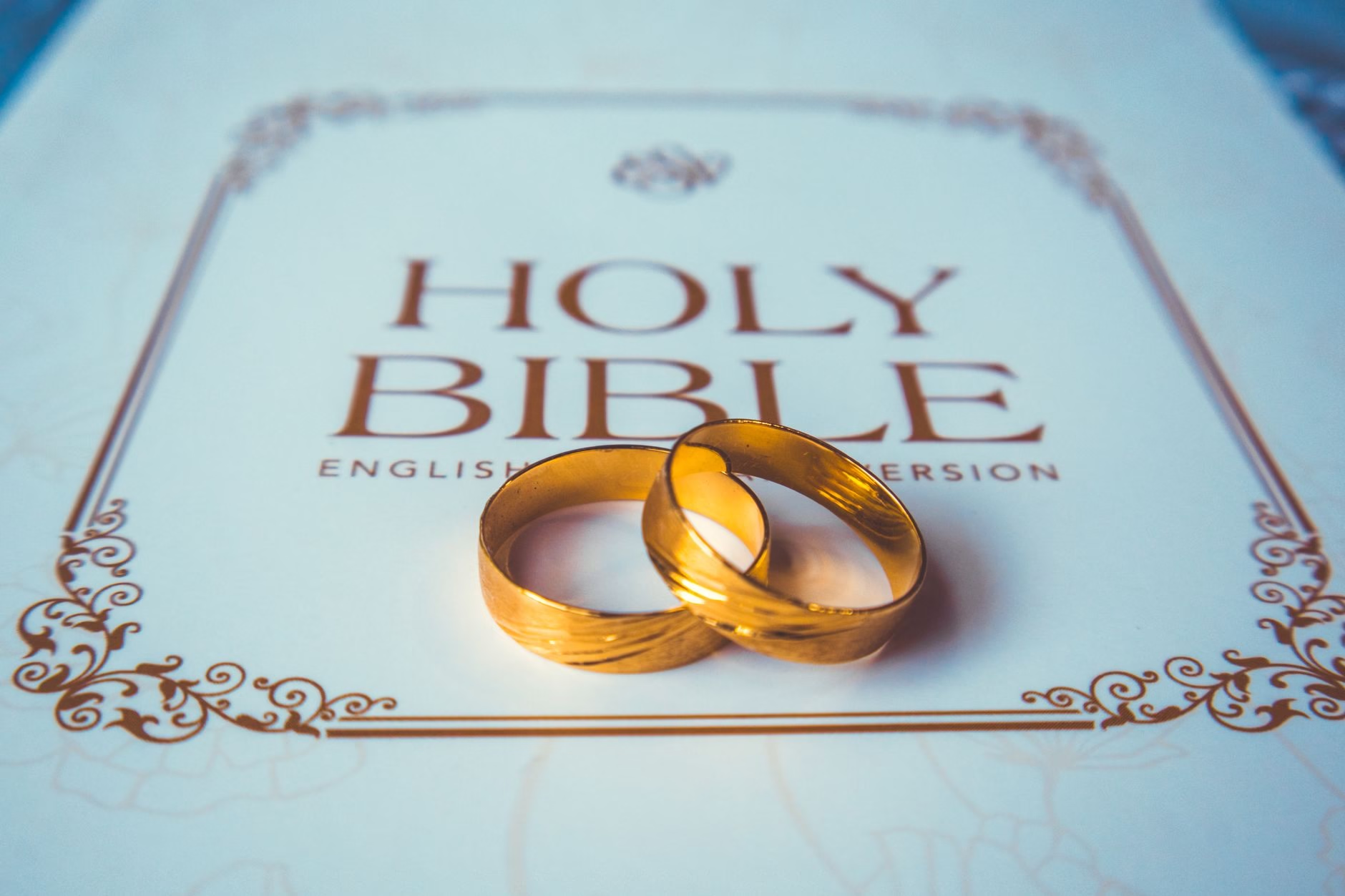
BIBLE VERSES ABOUT MARRIAGE CORINTHIANS
Introduction
Marriage is one of the most beautiful and sacred covenants established by God. It is much more than a social or legal agreement; it is a divine partnership designed to reflect the relationship between Christ and His Church. In a world where marriage is often tested by changing values, misunderstanding, and selfish desires, the Word of God continues to shine as a reliable foundation for believers.
The letters to the Corinthians, written by the Apostle Paul, contain some of the most practical and profound teachings about marriage found in the New Testament. Addressing real issues faced by believers in Corinth, Paul offers Spirit inspired wisdom that remains relevant for every generation. In this article, we will look at key Bible verses about marriage from the books of First and Second Corinthians, explore their meaning, and discover how these timeless truths can strengthen marriages today.
Marriage as a Calling from God
In 1 Corinthians 7, Paul speaks directly about marriage and the single life, emphasizing that both are gifts from God. He writes, “Each of you has your own gift from God, one has this gift, another has that” (1 Corinthians 7:7). This verse reminds us that marriage is not a human invention but a divine calling. It is a gift to be cherished and stewarded according to God’s plan.
Related Posts:


Paul acknowledges that some believers are called to remain single for the sake of serving God more freely, while others are called to marriage to build a godly family and express love in a covenant relationship. Both callings are honorable in God’s eyes. The key is to recognize God’s purpose for our lives and to walk faithfully in that calling.
For married couples, this means embracing marriage not as a mere obligation or convenience but as a sacred partnership designed by God for mutual fulfillment and spiritual growth. For singles, it means understanding that waiting for or choosing not to marry can also be a way to honor God with one’s life.
Mutual Love and Submission in Marriage
A powerful principle Paul presents is the mutual responsibility that husbands and wives share within their relationship. In 1 Corinthians 7:3–4, he writes, “The husband should fulfill his marital duty to his wife, and likewise the wife to her husband. The wife does not have authority over her own body but yields it to her husband. In the same way, the husband does not have authority over his own body but yields it to his wife.”
These words emphasize not dominance but equality, love, and mutual care. Marriage in the biblical sense is not about control, but about partnership. Both husband and wife belong to each other in love and service. This mutual submission mirrors the way Christ loves the Church, and how the Church responds with love and obedience to Him.
When a couple honors this truth, selfish motives dissolve, and a deep spiritual unity begins to flourish. Each spouse seeks the other’s well-being, both physically and spiritually. Love becomes an act of service, a daily decision to care, forgive, and build one another up.
reconciliation">Dealing with Conflict and Reconciliation
Paul also addresses the realities of human weakness and the potential for conflict in marriage. In 1 Corinthians 7:10–11, he writes, “To the married I give this command, not I but the Lord: A wife must not separate from her husband. But if she does, she must remain unmarried or else be reconciled to her husband. And a husband must not divorce his wife.”
These verses reveal God’s heart for reconciliation. Marriage is intended to be a lifelong covenant, and while difficult circumstances can arise, the emphasis is always on restoration rather than separation. Paul does not ignore the challenges; instead, he upholds forgiveness, prayer, and patient love as the tools to rebuild what is broken.
In modern times, couples face pressures from careers, financial struggles, and cultural changes. Yet God’s Word encourages believers to turn back to His wisdom. Seeking spiritual guidance, practicing honest communication, and submitting conflicts to prayer can transform even the toughest situations. Reconciliation reflects the very nature of God, who continually restores His people through grace and mercy.
Marriage and Christian Testimony
Paul reminds believers that their marriages are not only personal relationships but also testimonies of God’s grace. In 1 Corinthians 7:12–16, he explains how a believing spouse can influence an unbelieving partner through faithful love and conduct. “For the unbelieving husband has been sanctified through his wife, and the unbelieving wife has been sanctified through her believing husband” (1 Corinthians 7:14).
This sanctification does not mean the unbelieving spouse is automatically saved, but rather that the presence of a believing partner brings spiritual influence and moral light into the home. The believer becomes a living witness of Christ’s love, patience, and truth.
In today’s world, many Christians find themselves married to those who do not yet share their faith. These verses bring hope, reminding us that God can use one faithful heart to draw others closer to Him. Through prayer, compassion, and godly character, the believer becomes a vessel of grace in the marriage.
Love as the Greatest Foundation
Perhaps the most famous description of love in the entire Bible is found in 1 Corinthians 13. Although often read at weddings, Paul originally wrote these words to teach the church about true Christian love. Yet the principles apply profoundly to marriage. He writes that love is patient, kind, never proud or easily angered, and always perseveres.
This type of love, known as agape love, is not merely emotional; it is a spiritual commitment modeled after God’s unconditional love. When couples build their relationship on this foundation, they experience peace and unity that transcend emotion and circumstance.
Every marriage faces seasons of joy and difficulty. When love is rooted in Christ, it endures through every trial. Forgiveness replaces resentment, humility resolves pride, and prayer keeps the heart aligned with God. 1 Corinthians 13 reminds every couple that without love, all other efforts lose their value.
Key Lessons
- Marriage is a divine gift and calling that reflects God’s purpose.
- Husbands and wives are called to mutual love, submission, and respect.
- God desires reconciliation and healing within marriage.
- Believing spouses can be powerful witnesses of faith to their partners.
- Love, as described in 1 Corinthians 13, is the true foundation of a lasting marriage.
Conclusion
The teachings on marriage in Corinthians reveal the heart of God for couples who desire to live in harmony and faith. Paul’s words challenge believers to rise above selfishness and worldly patterns, and to embrace God’s design built on love, commitment, and grace.
Marriage is more than companionship. It is a spiritual covenant that mirrors the deep union between Christ and His Church. When couples live by the principles found in 1 Corinthians, they display the beauty of God’s love to the world.
If you are married, take time today to reflect on how these verses can strengthen your relationship. If you are single, let them shape your view of what godly marriage looks like. As we choose to build our lives on the truth of Scripture, our relationships will reflect the light and faithfulness of Christ.
May every believer walk in love, guided by the Word of God, so that our marriages become living testimonies of His unchanging grace.