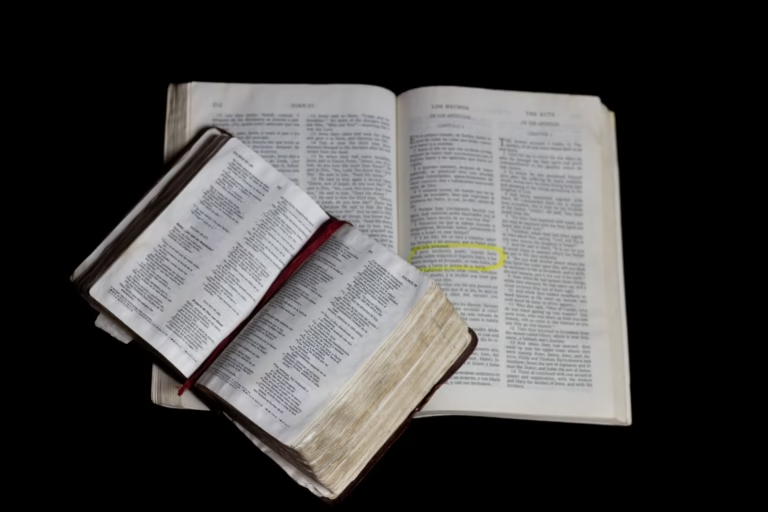
BIBLE VERSES ABOUT OFFERING MONEY
Introduction: The Heart Behind Giving
Money can be a delicate subject, even within the church. Yet throughout Scripture, the act of offering money is not simply about finances. It is a reflection of the heart. How we give reveals what we value most and how much we trust God as our provider. In an age where consumerism often takes priority, returning to the biblical foundation of giving helps believers live with generosity, gratitude, and faith.
The Bible provides clear insight into how God views offerings, what He values in our giving, and how generosity enriches both the giver and the kingdom of God. Understanding these truths allows us to give with joy and purpose rather than obligation or guilt.
This article explores key Bible verses about offering money, focusing on the spiritual meaning of generosity, the right attitudes to cultivate, and how our financial giving can become an act of worship that honors God.
Giving as Worship to God
In Scripture, offerings have always been an essential part of worship. The act of presenting something valuable before God demonstrates reverence and gratitude.
Proverbs 3:9–10 says, “Honor the Lord with your wealth and with the firstfruits of all your produce. Then your barns will be filled with plenty and your vats will be bursting with wine.”
The principle here is clear. Honoring God with our resources is not an afterthought but an acknowledgment that everything we have ultimately belongs to Him. When we give the first portion of what we receive, it declares that God is first in our lives.
When believers make giving a form of worship, it transforms routine tithing into a deeply spiritual experience. The offering plate or online giving portal becomes a place where our gratitude meets our faith.
Practical reflections on worshipful giving:
- View every act of giving as an opportunity to express your love for God.
- Pray before giving, asking the Lord to use your contribution for His glory.
- Remember that the value of a gift is not measured by its amount but by the heart behind it.
The Cheerful Giver and God’s Promise
Few verses capture the spirit of giving more beautifully than 2 Corinthians 9:6–7: “Whoever sows sparingly will also reap sparingly, and whoever sows generously will also reap generously. Each one must give as he has decided in his heart, not reluctantly or under compulsion, for God loves a cheerful giver.”
Paul reminds believers that generosity is not a transaction but a spiritual principle. Giving reluctantly or grudgingly misses the blessing that God intends for us. Cheerful giving stems from trust in God’s provision and a genuine desire to support His work.
This passage also introduces the agricultural image of sowing and reaping. Just as a farmer who plants generously expects an abundant harvest, those who give faithfully can trust God to supply every need and multiply the impact of their offering.
Key lessons from this verse include:
- Giving should be voluntary, not driven by pressure.
- Joy in giving reflects confidence in God’s faithfulness.
- Generosity leads to spiritual and often practical abundance.
When we give cheerfully, we align ourselves with the heart of God, who delights in blessing His children and using their gifts for eternal purposes.
The Example of the Widow’s Offering
One of the most powerful stories about giving is found in Mark 12:41–44, where Jesus observes people placing their offerings in the temple treasury. Many wealthy individuals gave large sums, but a poor widow contributed only two small coins. Jesus then told His disciples that she had given more than all the others because she gave all she had, while others gave out of their surplus.
This passage reminds us that God measures giving by sacrifice, not by size. The widow’s gift represented total dependence on God. She held nothing back, trusting that the Lord would take care of her.
Practical reflections from this story:
- God notices every act of giving, regardless of its amount.
- True generosity flows from trust, not abundance.
- Even small gifts, when given with sincerity, can have an eternal impact.
The widow’s example teaches us that God values the motive behind giving. Believers are called to give not to impress others but to honor God with pure hearts.
Offering Money as an Act of Stewardship
In Scripture, believers are described as stewards rather than owners. Everything we have, including money, belongs to God. We are entrusted to manage His resources wisely.
1 Corinthians 4:2 says, “Moreover, it is required of stewards that they be found faithful.” Faithfulness in financial stewardship means using what God has given us in ways that align with His will. This includes meeting our responsibilities, supporting ministry, and helping those in need.
When we view ourselves as stewards, giving becomes a matter of responsibility rather than reluctance. It is an acknowledgment of our role as caretakers of divine blessings.
Practical ways to nurture faithful stewardship:
- Set aside a regular portion of income for giving, both to your local church and to missions.
- Keep generosity as a priority in your budget.
- Remember that stewardship is not limited to money; it also includes time, talents, and relationships.
Faithful stewardship brings peace because it shifts our focus from accumulating wealth to advancing God’s kingdom on earth.
Supporting the Work of the Ministry
In the early church, offering money played an essential role in sustaining ministry work and supporting those in service. The Apostle Paul often thanked believers who contributed to his mission efforts.
Philippians 4:18–19 highlights this beautifully: “I have received full payment and more. I am well supplied, having received from Epaphroditus the gifts you sent, a fragrant offering, a sacrifice acceptable and pleasing to God. And my God will supply every need of yours according to His riches in glory in Christ Jesus.”
Paul viewed financial gifts not merely as support but as spiritual sacrifices pleasing to God. The promise that follows assures believers that God will supply every need of those who give faithfully.
Offering money for ministry work accomplishes several purposes:
- It enables the spread of the gospel locally and globally.
- It strengthens the church’s ability to serve the poor and needy.
- It invites God’s blessing upon both the giver and the church community.
When we give to support ministry, we participate directly in God’s mission to reach the world with His saving love.
The Blessing of Generosity
Generosity is not only a command but also a pathway to blessing. Scripture is filled with promises that those who bless others will themselves be blessed.
Luke 6:38 records Jesus saying, “Give, and it will be given to you. A good measure, pressed down, shaken together, running over, will be poured into your lap. For with the measure you use it will be measured back to you.”
This verse encapsulates the abundant nature of God. He delights in rewarding the generosity of His people. However, the greatest blessing of giving is not material gain but the joy and peace that come from reflecting the generous heart of our Father.
Benefits of living a generous life include:
- Greater contentment and gratitude for what we already have.
- Deeper trust in God’s ability to provide.
- The satisfaction of knowing that our giving advances God’s purposes.
Generosity transforms our relationship with money from one of anxiety to one of trust and purpose.
Conclusion: Giving That Honors God
Offering money is not merely a religious duty. It is a sacred act of worship, trust, and love. Through giving, believers echo the generosity of God Himself, who gave His Son for our salvation.
The Bible teaches that God is more concerned with the heart of the giver than the size of the gift. When we give cheerfully, faithfully, and sacrificially, our offerings become powerful testimonies of faith. They sustain ministries, bless others, and remind us that everything we have comes from the Lord.
May every believer strive to cultivate a heart that delights in giving. As we do, we will experience the truth of God’s promises and become channels of His provision to others. Let each offering be an expression of gratitude and a step of faith, proclaiming that God is worthy of all we have and all we are.