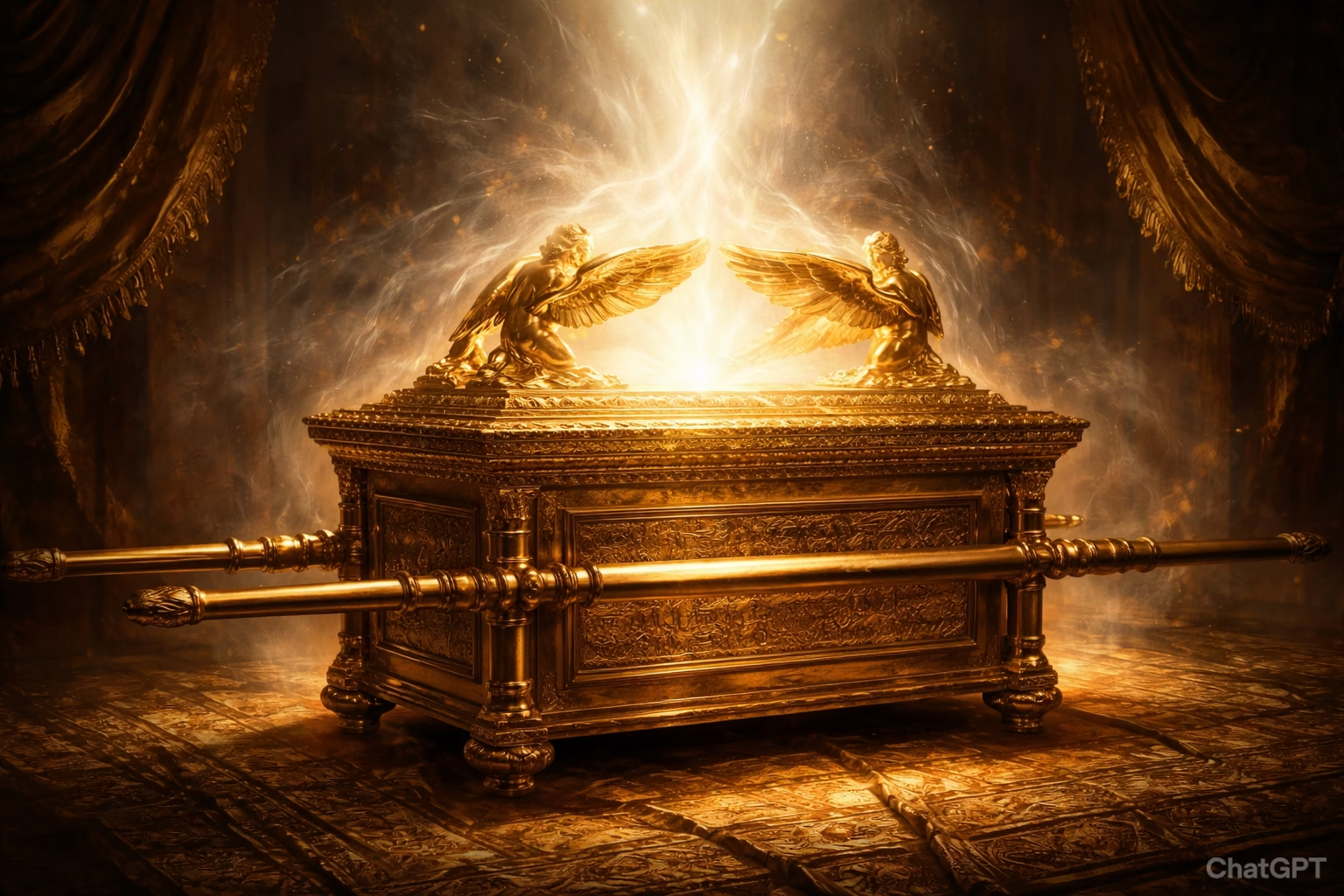
The Ark of the Covenant: Mystery, Meaning, and Enduring Fascination
Few objects in human history have sparked as much curiosity, debate, and imagination as the Ark of the Covenant. Revered as one of the most sacred artifacts in the Bible, the Ark stands at the crossroads of faith, history, and legend. From ancient scriptures to modern pop culture, its story continues to captivate believers, scholars, and explorers alike.
So what exactly is the Ark of the Covenant, why was it so important, and why does it still matter today? Let’s explore.
What Is the Ark of the Covenant?
The Ark of the Covenant is a sacred chest described in the Hebrew Bible, most notably in the Book of Exodus. According to tradition, it was built by the Israelites under the guidance of Moses after their escape from Egypt.
Biblical Description of the Ark
The Ark was said to be:
- Made of acacia wood
- Overlaid with pure gold inside and out
- Approximately 4 feet long, 2.5 feet wide, and 2.5 feet high
- Topped with the Mercy Seat, featuring two golden cherubim facing each other
Inside the Ark were sacred items that symbolized Israel’s covenant with God:
- The stone tablets of the Ten Commandments
- A golden jar of manna
- Aaron’s staff that budded
This made the Ark not just a container, but a physical representation of divine presence and promise.
The Spiritual Significance of the Ark
In biblical theology, the Ark of the Covenant represented God’s presence among His people. It accompanied the Israelites during key moments of their journey and played a central role in worship and warfare.
Why the Ark Was So Important
The Ark symbolized:
- God’s covenant with Israel
- Divine guidance and protection
- Moral law through the Ten Commandments
- God’s throne on Earth, as believed by ancient Israelites
Only specific priests (Levites) were allowed to carry it, and even then, strict rules applied. Touching the Ark improperly was believed to result in immediate death—a detail that underscores how sacred it was considered.
The Ark in Biblical History
Throughout the Old Testament, the Ark appears at pivotal moments:
- Crossing the Jordan River: The waters parted when priests carrying the Ark stepped in.
- The Fall of Jericho: The Ark was carried around the city as its walls eventually collapsed.
- The Tabernacle and the Temple: The Ark was housed in the Holy of Holies, the most sacred space, first in the Tabernacle and later in Solomon’s Temple.
These stories reinforced the belief that the Ark was closely tied to divine power and intervention.
The Great Mystery: What Happened to the Ark?
Perhaps the most intriguing question is: Where is the Ark of the Covenant today?
The Bible mentions the Ark until the Babylonian conquest of Jerusalem in 586 BCE. After that, its fate becomes unclear.
Popular Theories About the Ark’s Disappearance
Over time, several theories have emerged:
- Destroyed by the Babylonians during the destruction of the First Temple
- Hidden beneath the Temple Mount in Jerusalem
- Taken to Ethiopia, where the Ethiopian Orthodox Church claims it resides in Aksum
- Stored in heaven, according to certain religious interpretations
Despite countless expeditions and studies, no definitive evidence of the Ark’s location has ever been found.
The Ark in Popular Culture and Modern Imagination
The Ark of the Covenant has also made a lasting impact beyond religious texts. It frequently appears in:
- Movies (most famously Raiders of the Lost Ark)
- Books and documentaries
- Video games and fictional narratives
Often portrayed as a powerful or dangerous artifact, the Ark has become a symbol of humanity’s quest for divine knowledge and ultimate truth.
Why the Ark of the Covenant Still Matters Today
Even if the Ark’s physical location remains unknown, its symbolic power endures.
For believers, it represents:
- Faith and obedience
- God’s desire to dwell among humanity
- The seriousness of moral and spiritual responsibility
For historians and scholars, it offers insight into ancient Israelite worship, craftsmanship, and worldview. And for the general public, it remains one of history’s greatest unsolved mysteries.
Final Thoughts: Faith, History, and Mystery Intertwined
The Ark of the Covenant stands as a powerful reminder of how faith, history, and mystery can intertwine across thousands of years. Whether viewed as a literal sacred object, a symbolic representation of divine law, or a lost artifact that fuels the imagination, its story continues to inspire wonder.
In a world driven by technology and certainty, perhaps part of the Ark’s enduring appeal lies in what we don’t know. The mystery invites us to ask deeper questions—about belief, meaning, and the human longing to connect with something greater than ourselves.
And maybe that’s the Ark’s greatest legacy of all.